Across the regions we work in, we observe shrinking civic space and declining freedoms. We see the spread of divisive narratives that undermine truth and further exclude even the most marginalized people. As a result, trust in democratic institutions is rapidly eroding. And this is all being exacerbated by a swift, unequal digitalization of our societies.
Fortunately, we also see how we can strengthen people, initiatives and organizations that stand up to these challenges with alternatives. Guided by social justice values, they work to create a public sphere where people exercise agency, where their rights are protected, and which supports healthy, democratic debate.
Hivos works with them by putting their agency and priorities at the center of global and local efforts to promote Civic Rights in a Digital Age.
Civic Rights in a Digital Age in 2022
In 2022 we focused on the four key areas described below to help build more fair, just, and inclusive societies and online communities.

Building civic influence
Diverse civic actors and frontrunners in the Global South are at the center of our work. They raise social awareness, influence public regulation, and act as independent watchdogs. Their work specifically aims to increase the engagement of rightsholders and social justice organizations in defending digital rights. This is crucial if we want the concerns of those affected the most to be reflected in public policy and practice.
-
This is why Hivos attended the 2022 edition of RightsCon, the world’s leading summit on human rights in the digital age. It gathers human rights defenders, government representatives, business leaders, technologists, and journalists from around the world. Together we aimed to tackle the most pressing issues at the intersection of human rights and technology.
-
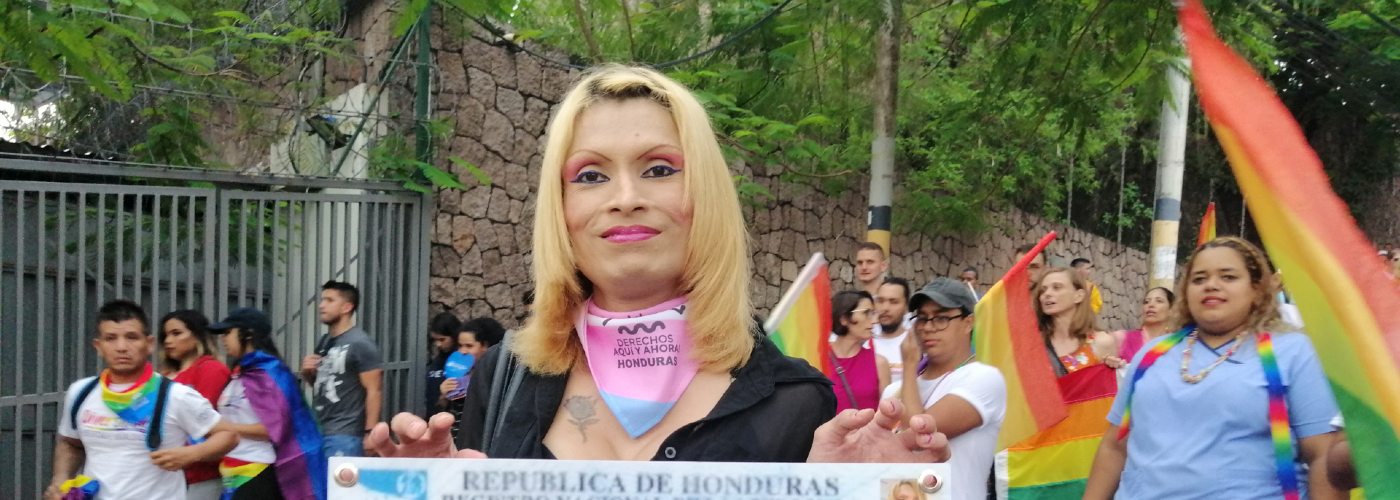
To tackle discrimination and combat inequality with justice, you need hard evidence. Especially when people deny that violence specifically targeting LGBTIQ+ people exists. So, in Central America, where this type of violence is especially prevalent, we use data in different ways to protect LGBTIQ+ communities.
In Guatemala, our Guate Diversa e Inclusive program works with GAX, a local organization that collects and analyses open data to systematically map violence against various population groups in the country. Together we show that violence and discrimination actually exist, so we can put pressure on governments and policymakers to protect the position of their LGBTIQ+ communities.
Defending activists
Our aim is to ensure that human rights defenders, independent media, social justice activists, and content creators can use data and technology safely, responsibly and effectively. Their work is increasingly digital and therefore vulnerable to a variety of digital threats. For example, surveillance, theft and misuse of sensitive data, targeted disinformation, and deep fakes that attack and discredit activists and other civic leaders.
-
In 2022 our Digital Defenders Partnership (DDP) program celebrated its tenth anniversary. Managed by Hivos, DDP has a feminist and rights-based approach. It focuses on core principles like human rights and internet freedom, inclusivity, and diversity, amongst others. The program supports individuals and organizations working on issues including environmental rights, LGBTI+ advocacy, gender equality, and election monitoring.
In 2022, DDP invited Sub-Saharan African human rights organizations to bolster their long-term digital security capacities and ability to respond to digital attacks through the Sustainable Protection Fund. DDP furthermore supported the Digital Security Lab Ukraine, an organization responding to the digital impacts of war.
And DDP also managed The Bessy Ferrera Fund, which is an emergency fund for direct aid that can mean the difference between life and death. The fund is financed by our Dutch donors. Thanks to them, we have assisted around 30 LGBTIQ+ people and organizations in Africa, the Middle East, and Latin America since the start in 2020.
-
At the end of the year, we launched a new tool called “Tech Care”. This step-by-step digital support guide for civil society developed by CiviCert helps smaller civil society organizations and grassroots groups respond to the digital safety needs of the people they work with and for.
These kinds of tools are always built on a set of digital principles that explain our values and determine the digital tools and approaches we use in our programs. These principles are based on our core values and represent the issues we prioritize in everything we do.
-
In 2022 the Dutch embassy in Costa Rica won the first edition of the Human Rights Prize for Dutch Embassies. This biennial prize, which Hivos gives together with 17 other Dutch human rights and development organizations, was awarded to the Dutch embassy that was most proactive, concrete and effective in defending and promoting human rights. In June 2022, Christine Pirenne, ambassador to Costa Rica, received the prize during an award ceremony at the Ministry of Foreign Affairs in The Hague.

Reshaping narratives
Prevailing narratives often legitimize unjust power relations. Reshaping those narratives involves strengthening diverse voices that contest the status quo, while increasing public understanding of, and support for, humane and just alternatives. At the center of this work are pioneering independent media producers, artists, journalists, and civil society groups. They challenge corruption, discrimination, and outdated gender norms with fresh, creative perspectives. They increase media literacy and promote community-centered alternatives to prevailing top-down digitalization.
-
At Hivos, we treasure the disruptive power of arts and culture, which is why we have worked for so many years together with creatives from all over the world. In 2022, Our Resource of Open Minds (R.O.O.M) program and its Digital Earth fellowship continued supporting creative expression through critical content produced by a myriad of artists and creatives.
In fact, 2022 was quite a busy year for R.O.O.M. For example, powering East Africa’s creative and theater sector and organizing a forum about how traditional practices influence modern critical art in Zimbabwe. We also published an intellectual property toolkit for creatives in Kenya, Uganda and Tanzania and a financial management and sustainability Toolkit for Creatives in East Africa. Our 2022 report “The Utility and Viability of Digital Technologies” shows the extent to which digital technologies can be used in producing and disseminating audio-visual creative content on human rights.
-
Free and honest journalism seeks out and tells the truth. That’s why it is important to tackle fake news. As part of our Freedom of Expression and Information in Tunisia program, the National Union of Tunisian Journalists (SNJT) has launched its own fact-checking unit. It not only tackles the growing problem of misinformation and fake news in Tunisia, but also aims to normalize fact-checking as a journalistic practice in the country. The unit publishes its work on Twitter and a multilingual Facebook page.
To mark World Press Freedom Day 2022, SNJT also launched a campaign raising the alarm about declining press freedom in Tunisia. The 2022 World Press Freedom Index shows that Tunisia ranks 94 out of 180 countries. Additional activities in 2022 to support Tunisian journalists include training on laws that either protect or threaten Freedom of Expression, data journalism, investigative journalism, information gathering, data processing and visualization techniques.
-
A major R.O.O.M. achievement in 2022 was publishing the Vertical Atlas. This book was the result of a four-year collaboration between Het Nieuwe Instituut and Hivos’ Digital Earth research fellowship for artists who investigate our current technological reality. The Vertical Atlas offers a unique look at worldwide digital transformations; for example, how the mobile phone has opened up African societies for both better and worse.
-
Hosted and organized by R.O.O.M, African Crossroads is a community of future-oriented African thinkers and doers. They regularly meet to critically reflect on cutting-edge entrepreneurial, scientific, artistic, and technological developments anchored in African traditions.
In 2022 African Crossroads organized its fifth edition, an engaging two-day event held in Harare, Zimbabwe. While many participants were able to attend in-person, an even larger part of the audience connected online from across Africa. At the end of the event, participants emerged with a blueprint that will shape the trajectory of the community in the period 2023 to 2027. African Crossroads has become a truly pan-African network that reflects and acts together on pressing issues across the continent.
The Digital Monoculture and an alternative digital sphere
At present, corporate social media platforms have extraordinary influence over the way we access and share information. Over time, they have transformed the digital public sphere into an unhealthy and commercialized digital monoculture.
These platforms also allow disinformation, hate speech and violence to proliferate. In the regions where Hivos works, they enable ever more polarization and online sexual abuse. They facilitate disinformation campaigns that target LGBTIQ+ communities and their rights defenders.
That’s why Hivos works to stimulate a vibrant and diverse digital public sphere where people can come together to freely discuss and identify societal problems and influence political action. We support alternative digital spaces for activist and creative communities that will stand up to the digital monoculture. They are essential if we want to imagine and work towards a more humane and sustainable digital future.
Influencing public spending
Social justice organizations and activists need to have greater influence on (local) public spending priorities to hold governments to account for them. Generally it is the most vulnerable citizens – people suffering exclusion and climate impacts – who depend on the just use of public resources by local authorities. So, government openness and responsiveness at the local level is essential.
-
In June 2022, Hivos’ Voices and Actions for Accountability in Malawi (VAAM) program launched an online platform to better connect citizens with local authorities. Corruption is one of the major challenges affecting Malawi, and this platform should make it easier to look keep track of public spending. It was developed by our technical partner MHub through a collaboration between Hivos and the Catholic Commission of Justice and Peace in the Archdiocese of Lilongwe, with funding from the European Union.
-
The digital revolution has brought new economic opportunities and the ability to access and share information more freely. Since joining the Open Government Partnership (OGP) in 2020, the government in Nandi County, Kenya, has committed to a process of participatory governance. They now include citizens and local civil society organizations in their agenda. This move was further strengthened by a partnership between the Nandi government, Hivos, the Open Government Institute, and others to support the county’s local OGP action plans. Hivos is always committed to work with progressive governments to build democratic spaces that encourage public participation. For us, digital innovations must always strive to respect civil liberties.
For priority rightsholders and affected countries to get access to the funds they need, we have to target the transparency and accountability of climate finance flows and influence the global climate finance architecture.
An obvious place to do this was the COP27 conference in Sharm-el-Sheik, Egypt, in November 2022. Hivos and several partner organizations were part of various forums that combined efforts to address just climate finance. The establishment of a loss and damage fund to help developing countries pay for the mounting costs of climate-related disasters was a welcome outcome.
A number of organizations, including Hivos, endorsed the Principles for Locally-Led Adaptation. But following COP27, it is clear that adaptation finance lags significantly behind. Much more funding must flow to local actors. Hivos’ briefing paper shows ways for international donors and funds, as well as for intermediaries, to increase the effective flow of financial resources to the local level.
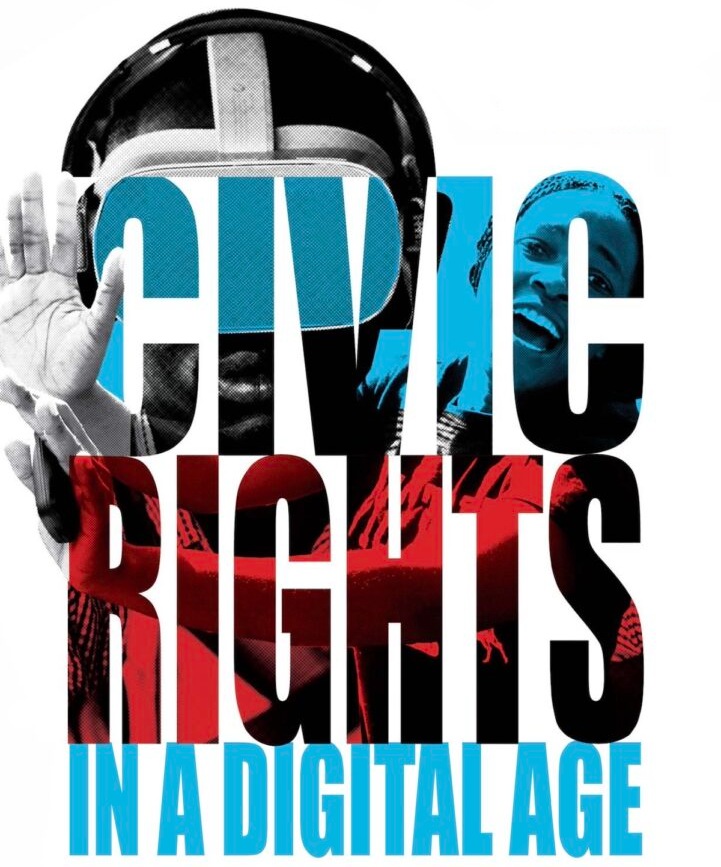
Putting civic action, justice and responsibility at the heart of our societies
This white paper outlines the ambition, approach and Theory of Change of one of Hivos’ three impact areas: Civic Rights in a Digital Age.