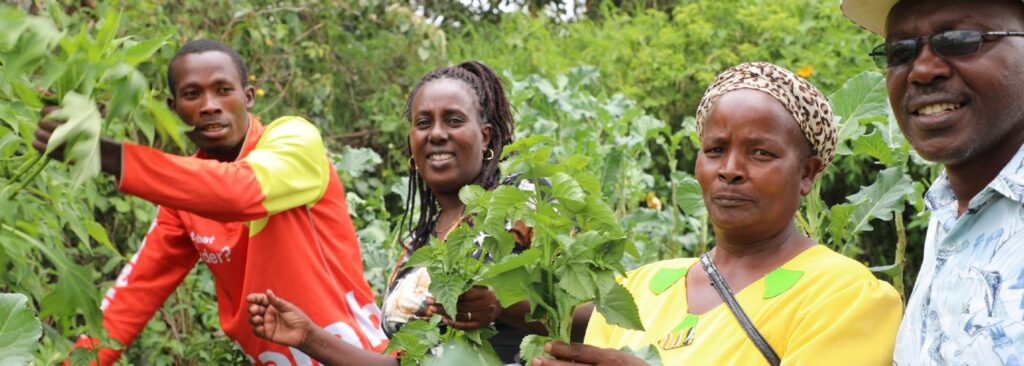
Hivos is organizing a forum about land rights for rural women champions from Kenya’s Baringo, Nakuru, Laikipia and Kitui counties. We’re looking for a consultant to facilitate the interactive sessions.
About Rural Women Cultivating Change (RWCC)
Implemented in Kenya, Tanzania, and Ethiopia, the RWCC project aims to shift the cultural attitudes and structures that limit young and adult rural women (particularly women smallholder farmers, female heads of households, and survivors of Sexual Gender Based Violence – SGBV), allowing them to take control of their own lives, advocate for themselves and others and take leadership within communities and beyond.
Using gender transformative, participatory agroecological, women leadership approaches and reinforcing interventions aimed at preventing SGBV, the project focuses on the intersection between women’s rights and climate adaptation to better support sustainable and equitable resource management, agricultural production and access to markets. It further alleviates poverty through reduced personal and collective vulnerability to social, economic, and climate shocks. The project is also providing mentorship for women-led SMES and incubators through GALS trainings and investment forums.
The assignment
Women’s access to land and property is central to women’s economic empowerment, as land can serve as a base for food production and income generation, as collateral for credit and as a means of holding savings for the future. In Kenya, secure land tenure rights are still a realm for men but a rarely accessible luxury for women who provide 80 percent of the labor in agricultural production, which is the mainstay for most households in Kenya.
Land is also a social asset that is crucial for cultural identity, political power and participation in decision making. Women’s equal access to land is a human rights issue. It also has other benefits. Evidence shows that women’s land rights reduce domestic violence, that women who own land are more capable of exiting violent relationships and negotiating safe sex. Agricultural production and food security also increase when women are granted tenure security.
Women are responsible for between 60 and 80 percent of food production in developing countries. Yet they rarely own the land they are working on, have tenure securities or control over the land. They often have limited decision-making power and control over how to use the land or its outputs.
Women and men’s, de jure access to land is regulated by the formal legal system, and in many developing countries similarly through customary law. There are many examples of how the two systems can both prevent and promote women’s access to land. The formal legal systems in many countries have constitutions or land laws that grant gender equality in access to land but where laws for marriage, divorce and inheritance contradict these laws by discriminating against women and daughters.
Understanding the complex interplay of land-related factors is crucial for promoting sustainable agriculture, ensuring food security, and addressing environmental concerns. Policymakers, farmers, and researchers continually work towards finding innovative and sustainable solutions to optimize land use in agriculture. In this regard, Hivos will organize a forum for rural women champions from Baringo, Nakuru, Laikipia and Kitui counties where diverse issues related to women and land rights will be discussed.
Specific objectives
Hivos will organize land conference to achieve the following:
a) Awareness and education: Providing women with knowledge about their rights to land ownership and tenure, including legal frameworks, customary laws, and mechanisms for securing land rights. This will empower the rural women to understand and assert their rights effectively.
b) Capacity building: Enhancing the skills and capacities of women to navigate legal processes, access resources, and advocate for their land rights. This may include training on documentation, negotiation, and conflict resolution.
c) Empowerment: Empowering women to exercise agency and decision-making power over land-related matters within their households and communities.
d) Legal literacy: Improving women’s understanding of relevant laws, policies, and procedures related to land rights, including inheritance laws, land registration processes, and dispute resolution mechanisms.
e) Community engagement: Facilitating dialogue and engagement within communities to challenge gender norms and promote equitable access to and control over land resources.
f) Networking and advocacy: Facilitating networking opportunities for rural women farmers to connect with each other, share experiences, and collectively advocate for policy reforms and implementation of laws that protect and promote women’s land rights.
Methodology
The dialogues will be facilitated by an expert facilitator and the Project Officer for RWCC. This will involve group activities and plenary sessions.
Scope of the assignment
The consultant/firm is expected to deliver the following:
- A two-day interactive session for women farmers drawn from the four project counties.
- Training materials: Prepare all necessary training materials, including presentations, handouts, and multimedia resources. Ensure that materials are engaging, informative, and suitable for diverse learning styles.
- Interactive exercises: Develop interactive exercises and activities to reinforce key concepts. Include role-playing scenarios, group discussions, and practical exercises to enhance participants’ skills.
- A comprehensive final report summarizing the training program’s outcomes, including participant feedback, areas of improvement, and recommendations for future media training initiatives.
Consultant qualifications and experience
- Background in law with a solid understanding of land rights frameworks, policies, and laws, particularly as they relate to women’s rights and gender equality. This includes familiarity with international conventions, national legislation, and customary land tenure systems.
- Experience working on gender equality and women’s empowerment initiatives, particularly in the context of land rights, is valuable.
- Strong training and facilitation skills including the ability to design and deliver interactive and participatory training sessions, as well as create a supportive learning environment.
- Experience in engaging with communities, grassroots organizations, and policymakers on issues related to land rights and gender equality is important. This may involve advocacy, community mobilization, and awareness-raising activities.
Expected deliverables
1. A two days interactive training in Nairobi
2. Training material
3. Workshop reports
How to apply
All applications should be sent to the email address eastafricajobs@hivos.org by February, 18 2024 5 pm EAT with the following information:
- Technical proposal detailing your experience, why you are the best fit for this assignment, and your proposed general approach to the consultancy.
- CV of consultant(s) and description of any partners or contributing institutions as appropriate.
- Not more than 1 page describing the financial proposal i.e. of how long it will take to deliver the workshop, professional fees (per day) and reimbursable costs (tax inclusive).
- Proof of similar previous assignments delivered.
The email subject should read: “LAND CONFERENCE TRAINER”
Only shortlisted candidates will be contacted.
About Hivos
Hivos is an international development organization guided by humanist values. Together with citizens and their organizations, we aim to contribute towards just, inclusive and life sustaining societies where people have equal access to opportunities, rights and resources. We work in partnership with others in the Middle East, Africa, Asia and Latin America on three impact areas: Civic Rights in a Digital Age; Gender Equality, Diversity and Inclusion, and Climate Justice.