For the Rural Women Cultivating Change project, Hivos is seeking to hire a consultant to conduct a gender and intersectional assessment aimed at promoting equitable opportunities in rural agricultural value chains, with a specific focus on the four project counties in Kenya: Baringo, Laikipia, Kitui, and Nakuru.
About Rural Women Cultivating Change (RWCC)
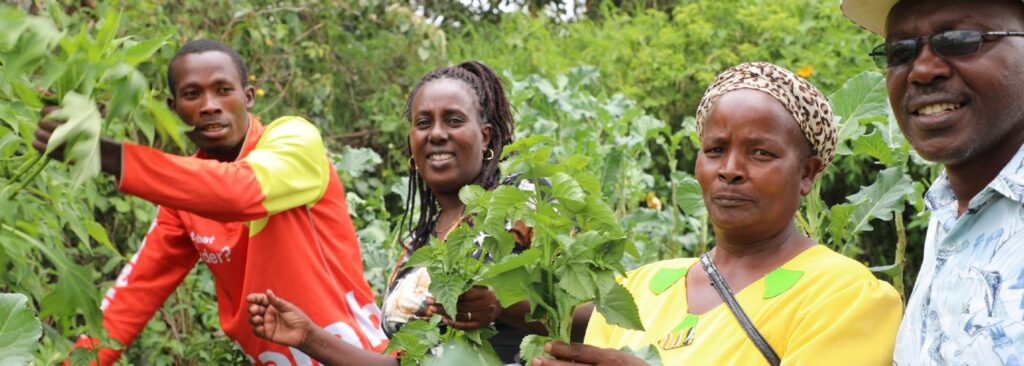
Implemented in Kenya, Tanzania and Ethiopia, the RWCC project aims to shift the cultural attitudes and structures that limit young and adult rural women (particularly women small holder farmers, female heads of households and survivors of Sexual Gender Based Violence (SGBV) allowing them to take control of their own lives, advocate for themselves and others and take leadership within communities and beyond. Using gender transformative, participatory agroecological, women leadership approaches and reinforcing interventions aimed at preventing SGBV, the project focuses on the intersection between women’s rights and climate adaptation in order to better support sustainable and equitable resource management, agricultural production and access to markets. It further alleviates poverty through reduced personal and collective vulnerability to social, economic and climate shocks.
RWCC works in collaboration with women’s rights organizations and agricultural based organizations to support climate adaptation, increase food security, enhance gender equality, reduce sexual and gender-based violence (SGBV), and improve livelihoods for rural women. One of the intermediate outcomes of the project is enhanced benefit for Y/A women, particularly from FHHs, in climate-resilient and local food systems including income-generation.
Purpose
Hivos seeks to hire a consultant to conduct a gender and intersectional assessment aimed at promoting equitable opportunities in rural agricultural value chains, with a specific focus on the four project counties: Baringo, Laikipia, Kitui, and Nakuru.
Agricultural value chains in rural areas are crucial sources of livelihood and economic growth. However, gender and intersectional inequalities continue to restrict access to resources, opportunities, and decision-making roles. Women, youth, and other marginalized groups face systemic barriers that limit their participation and benefits within these value chains. Recognizing these challenges, the Rural Women Cultivating Change (RWCC) project aims to conduct a comprehensive gender and intersectional assessment to address these disparities and foster an inclusive environment for all value chain participants.
The purpose of this consultancy is to map out and analyze specific barriers and opportunities within selected agricultural value chains. The findings from this assessment will inform targeted strategies and recommendations to promote inclusivity, equity, and improved livelihoods for women, youth, and marginalized groups engaged in agriculture.
By providing stakeholders with evidence-based insights into gender and intersectional barriers, this assessment will highlight gaps and suggest actionable strategies for more equitable access to resources and increased income opportunities for marginalized groups. The findings will also guide programming and support the development and implementation of interventions that foster inclusive, sustainable value chains benefiting all participants.
Objectives
The specific objectives of this consultancy are to:
- Identify and analyze barriers: Understand the gender-based and intersectional barriers (e.g., socio-economic, cultural, and structural) that impact equitable participation in rural agricultural value chains.
- Map value chain dynamics: Assess the roles, responsibilities, and resource access points for different actors within agricultural value chains, with an emphasis on women, youth, and marginalized communities.
- Highlight best practices and opportunities: Identify examples of inclusive practices and existing opportunities that could be scaled or adapted to improve gender equity in rural agriculture.
- Develop actionable recommendations: Provide practical recommendations for stakeholders to support an inclusive environment within these value chains, enhancing access to resources, fair income distribution, and decision-making roles for all.
Scope of work
The assessment will focus on key rural agricultural value chains, potentially including crops, livestock, and other income-generating agricultural activities. The consultant(s) will engage in the following activities:
- Desk review and literature analysis: Reviewing relevant literature, policies, and existing data to understand the context of gender and intersectional issues within rural agricultural value chains.
- Primary data collection: Conducting interviews, focus groups, and surveys with stakeholders, including women farmers, youth, smallholder farmers, cooperatives, community leaders, and local government representatives.
- Stakeholder mapping: Identifying key stakeholders and their roles within the selected value chains, with a focus on understanding dynamics that affect equitable access to resources and opportunities.
- Data analysis and synthesis: Analyzing collected data to identify trends, barriers, and gaps in gender and social inclusion.
- Recommendation development: Crafting actionable recommendations that address identified gaps and promote inclusive agricultural practices.
Expected deliverables
- Inception report: Outlining the proposed methodology, work plan, and timeline for the assessment.
- Draft assessment report: Presenting initial findings, challenges, opportunities, and best practices for inclusive rural agricultural value chains.
- Validation workshop: Conducting a workshop to discuss findings with stakeholders and refine recommendations based on feedback.
- Final assessment report: A comprehensive report with detailed analysis, best practices, and specific recommendations for promoting gender equity and social inclusion.
- Executive summary and policy brief: A concise document summarizing key findings and policy-oriented recommendations
Time frame
The consultancy is expected to be completed within a period of three months from the start date. A detailed work plan with key milestones and deliverables will be agreed upon during the inception phase.
Skills and qualifications of consultants
We are looking for consultants/team with the following skills and qualifications:
- Advanced degree and strong background in gender studies, sociology, agricultural economics, rural development, or a related field.
- Experience conducting gender and intersectional assessments, especially in agricultural or rural contexts.
- Minimum of 10 years of experience in climate change, rural development, gender analysis, or related fields.
- Familiarity with the dynamics of rural agricultural value chains and the challenges faced by women and marginalized communities.
- Proficiency in both qualitative and quantitative research methods.
- Excellent communication skills, particularly in facilitating workshops and engaging diverse stakeholders.
Application process and requirements
Qualified and interested parties are asked to submit a detailed technical and financial proposal clearly demonstrating a thorough understanding of the Terms of Reference including but not limited to the following:
- Company profile (where applicable).
- Description of the methodology and work plan.
- Demonstrated previous experience in similar tasks and other qualifications outlined in this ToR.
- Team composition (if applicable) complete with their curriculum vitae and/or relevant work portfolio
- A detailed budget in -Kenya Shillings -with breakdown of costs for the study.
All proposals should be sent electronically with attachments in pdf and a subject line: RWCC Project- Intersectional assessment to eastafricajobs@hivos.org not later than 16th December 2024.
About Hivos
Hivos is an international development organization guided by humanist values. Together with citizens and their organizations, we aim to contribute towards just, inclusive and life sustaining societies where people have equal access to opportunities, rights and resources. We work in partnership with others in the Middle East, Africa, Asia and Latin America on three impact areas: Civic Rights in a Digital Age; Gender Equality, Diversity and Inclusion, and Climate Justice.