In Nyengseret subdistrict, Bandung City, Indonesia, there was a time when high school dropout rates, unmanaged waste, and the stigma of being a “problematic neighborhood” all reinforced one another. Back then, only one out of ten children managed to finish senior high school. One of them was Sandi Syarif. Today, Sandi has become a force for change in his community through collective action born from the discomfort and inequality he witnessed around him.
Since 2014, Sandi has taken action through simple steps: opening spaces where children in the neighborhood could play and learn at the same time. A small library, art classes, and neighborhood clean-up activities became ways of building trust. “If we don’t fix this area ourselves, who will?” he said. Sandi started to realize that education and environmental issues cannot be separated from the economic realities faced by residents.
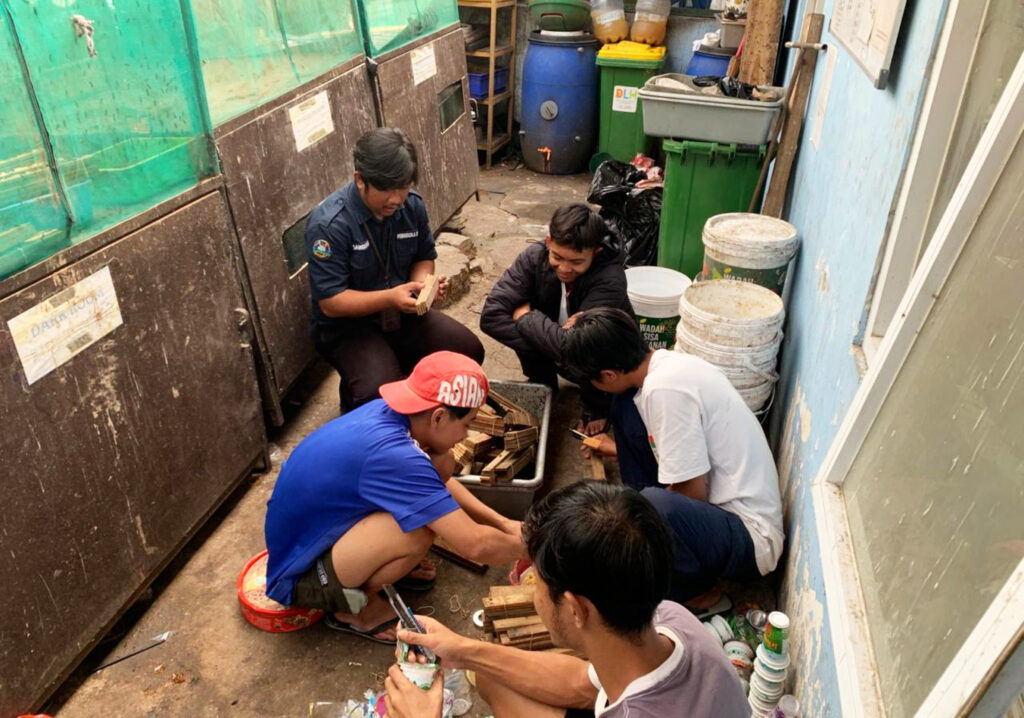
His vision for the community evolved over time. Beginning with a biodigester, Sandi and his community started managing organic waste in 2014. This effort later expanded into a maggot house, a waste bank, composters, and household waste-sorting training in several neighborhoods. When Bandung declared a waste emergency, this community-led initiative offered a concrete local solution, processing hundreds of kilograms of organic waste each day.
Engaging youth
Sandi later named his community One‑Six, a reference to the neighborhood’s unit number. He chose the name as a middle ground and to highlight a spirit of unity and togetherness. Within One-Six, Sandi plays a central role as the leader and as a mentor and liaison for the younger generation. Most members come from the local youth organization, but membership is not limited to Nyengseret subdistrict. It is also open to young people who had previously dropped out of school or struggled to participate in community life.
Today, change in Nyengseret subdistrict is tangible. Together with WRI Indonesia, Sandi and his community have reduced household food waste in the neighborhood. Residents now speak up when their streets are dirty, women bring reusable shopping bags, young people regularly clean the river. Waste removal is no longer seen solely as the government’s responsibility. This transformation, Sandi believes, is fragile if left unattended. That is why he chooses to carry on.
The future of urban food systems
Stories like this, about creating a turning point in a community, are typical of the Urban Futures program. It provides a new framework for people to think about their environment, what can impact it, and the importance of community-based action and education. “Urban Futures has opened my mind to educate the community more deeply,” Sandi said.
Amid a rapidly changing city, Sandi’s experience shows the future of urban food systems and livability, including how waste is handled. This is not only about technology or grand policies, but about inspiring young people to care for their neighborhoods, slowly, collectively, and sustainably.