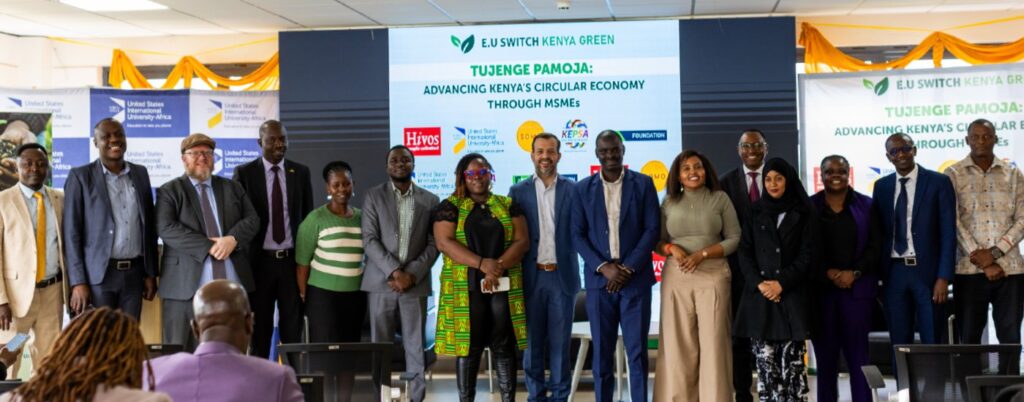
Kenya is grappling with a growing waste management challenge. Most of the 8 million tons of annual waste is poorly managed, adding to existing pollution and CO₂ emissions. At the same time, Kenyans are coming up with creative solutions that turn waste into value. Six months ago, the EU SWITCH Kenya Green Tujenge Pamoja program was launched to support those solutions and accelerate Kenya’s transition toward a circular and inclusive green economy.
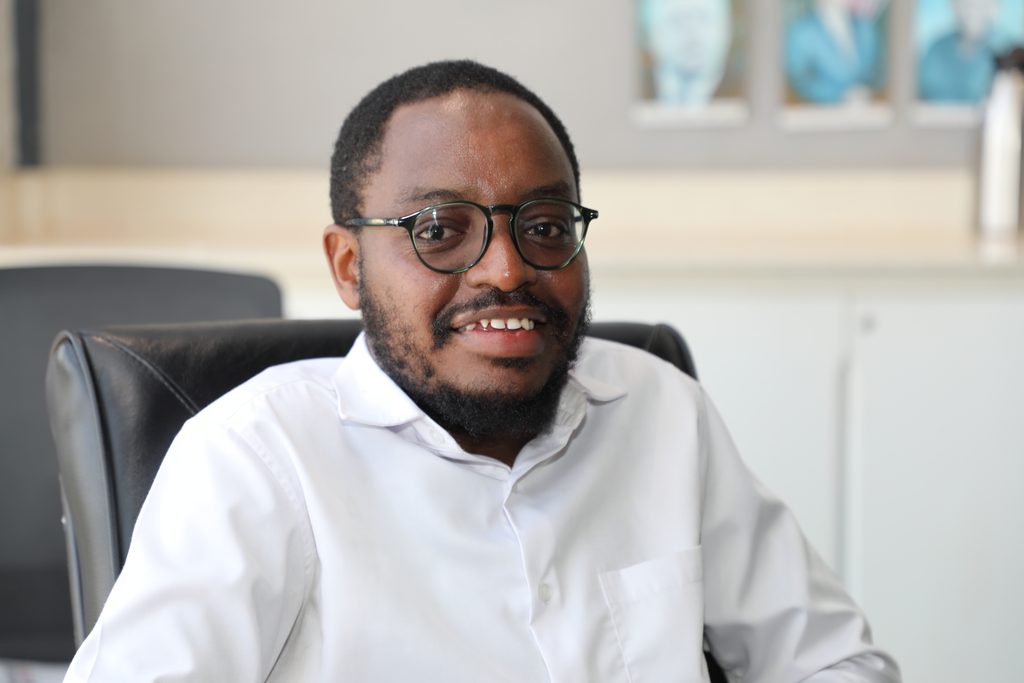
By Job Muriithi, DMEL Officer, EU SWITCH Kenya Green Tujenge Pamoja
At the start of the program, I could have recited our targets by heart – how many businesses we hope to support, how many people we want to train, how many green jobs we hope to help create. My work is to help measure program achievements and learn, so numbers are my trade. And yet, half a year in, the thing I keep returning to has almost nothing to do with numbers. It is a quieter discipline we set ourselves at the very start: to listen before we assume.
But first: gathering evidence
It would have been easy to kick-off with a finished plan: work with small businesses turning plastic, waste and old textiles into something valuable. There is no shortage of ideas about what such businesses “need.” Instead, we slowed down. The consortium sat down with the different county governments where we implement. Rather than rushing to deliver, we chose first to gather evidence, commissioning a careful study of the businesses themselves and getting to know them.
We quickly realized that no two counties are the same. Some are well ahead in how they manage waste and track it; others are just beginning. In Kenya this is largely work that counties lead, with national bodies setting the standards and lending support – so there was never going to be a single blueprint we could roll out everywhere.
The counties welcomed us openly, and most seemed to already know exactly where their gaps lie. It became clear that our task is not to tell them what they need. It is to listen, and to find where we can genuinely support. That belief runs deep for me: the best development work leaves people steering their own future, with us walking alongside rather than out in front.
Program design should fit their world, not the other way around
Inclusion is easy to promise and hard to prove. Women, young people, people living with disabilities, and LGBTIQ+ entrepreneurs are too often pushed to the margins of the economy to stand at the center of Kenya’s circular transition. They should be included and not to be counted at the end of it.
It is not enough to report that we reached so many businesses, or that a share of those businesses was led by women or by young people. Reaching people is not the same as including them. A woman can attend every training and still gain no more say over her business; a young entrepreneur can sit inside our numbers and still be shut out of a loan. So, the success I care about is quieter, and harder to capture. Are people gaining real skills, real income, and real control over their own enterprises?
Keep learning and adjusting
So far, we have built a habit to keep learning as we go. We can change course when evidence tells us to. In monitoring and learning, that willingness is everything.
The real work – training, mentoring, value addition – is still ahead of us. Our future evidence will have to answer if the businesses we support are gaining real skills, income and confidence, if the counties economies are growing stronger and if inclusion becomes tangible. These first months have taught me that the start matters. Build on assumptions, and you may hit your targets while missing the point. Build on listening, and you have a chance of making something that lasts. Something that genuinely belongs to the people it is meant to serve. That, to me, is what it means to build together.