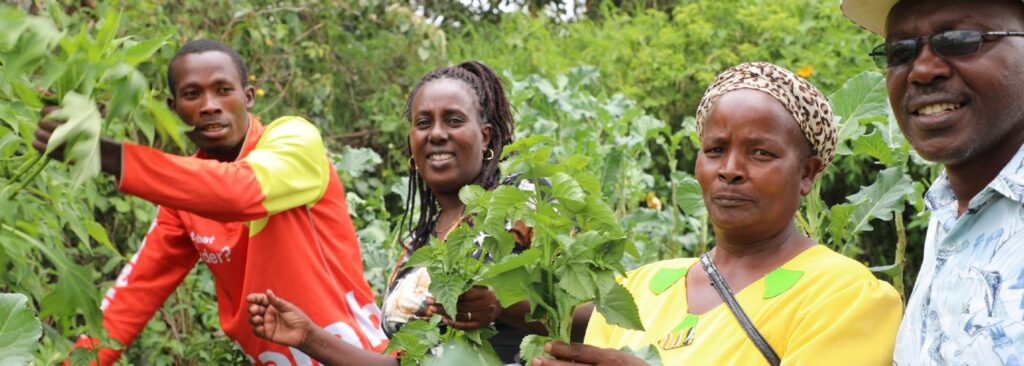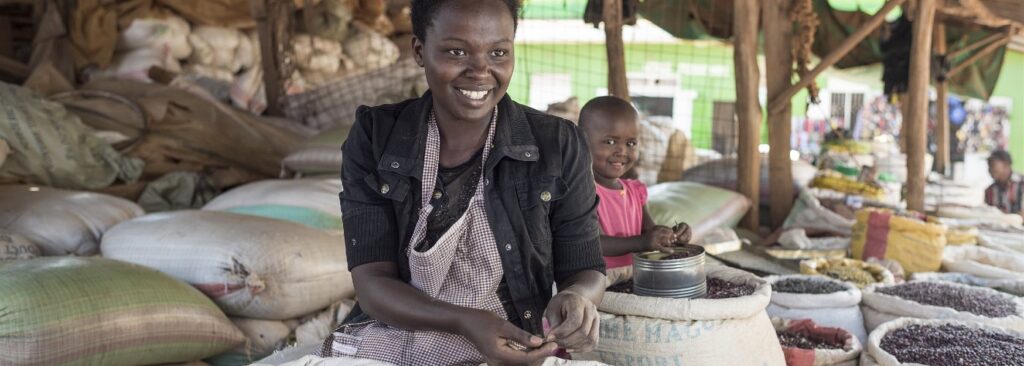
For many young people in Kenya, success is still imagined behind a desk or in a Nairobi office. Meanwhile, farming has an image problem, it is too easily associated with poverty, hardship or as a last resort when other opportunities fail. At the 3rd National Agroecology Symposium in Nairobi, that stereotype was met with a very different reality.
On July 22 and 23, 2026, more than 550 people gathered at the Kenya School of Monetary Studies under the theme; Transforming Agrifood Systems through Agroecology: A One Health Approach for Inclusive, Sustainable and Resilient Futures. The discussions ranged from science to policy, and addressed a more fundamental question: whose knowledge will shape the future of farming?
Learning from grassroots practices
Hivos, through the Rural Women Cultivating Change program, convened a side event with GROOTS Kenya. It focused on the role of grassroots movements in advancing agroecology. The session brought together women farmers, grassroots organizations, government representatives and civil society to engage in conversation. Moderated by Chebet Chirchir, Program Officer at Hivos, the discussion moved from defining agroecology to explore how people practice it on their farms and in their communities.
The panelists spoke from their lived experiences. They touched on the realities women face in agriculture, the importance of farmer-to-farmer learning, youth engagement and access to knowledge and resources. For generations, rural women have learned from the land, exchanged seeds, observed changes in the weather, experimented with different farming practices and shared their knowledge with their families and communities.
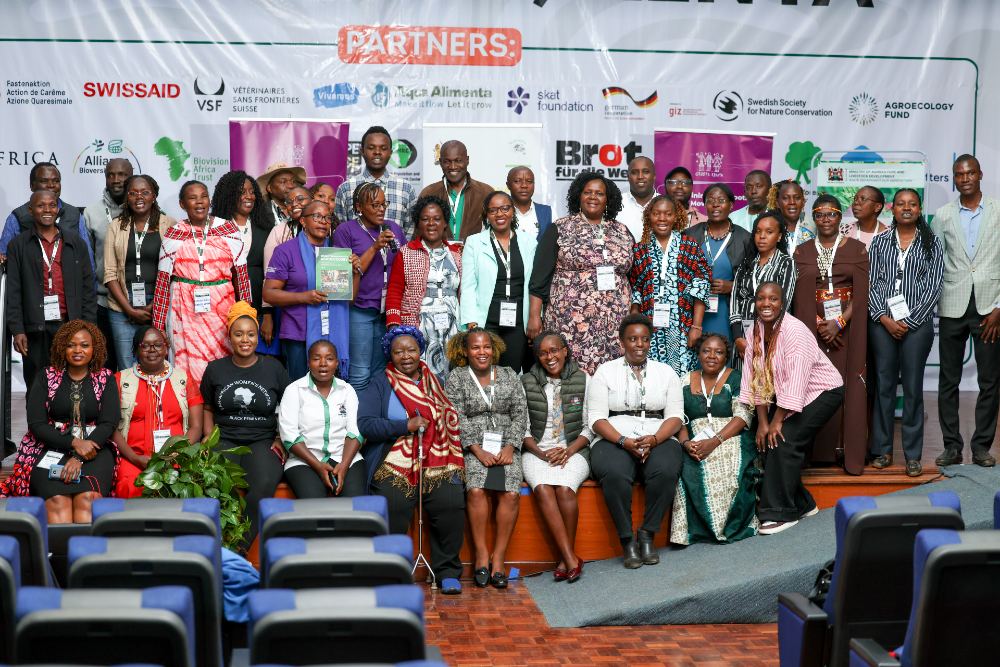
However, their knowledge is not always given the same recognition as knowledge from formal institutions. The side event aimed to challenge this disparity. The event created an opportunity for farmers’ experiences to be recognized. It also offered technical and policy knowledge, acknowledging that meaningful changes in food systems require both.
Engaging youth in farming
How does farming appear to a young person who was raised believing that success means leaving the farm? According to Esther Njeri, a young farming advocate, many young Africans still view agriculture as something their parents and grandparents did out of necessity.
In general, white-collar jobs are perceived as carrying more status than farming. Young people may grow up surrounded by agricultural knowledge and land, yet still envision their future elsewhere. Parents sometimes reinforce this idea by working hard to educate their children so they won’t experience the difficulties they associate with farming.
However, Esther Njeri argues that agriculture is much more than hard physical labor, uncertain harvests, and poor returns. “It includes producing and marketing food, seed enterprises, processing, technology, research, adding value, communications, distribution, and building businesses around agricultural products and services.”
When viewed through this lens, the question shifts from “Why would a young person want to farm?” to “What kind of agricultural sector would make a young person want to stay?”. The sector must offer opportunity, income, and room for innovation. But also promote the idea that choosing agriculture does not mean settling for less. The wider symposium reinforced this point by giving young innovators a platform to present ideas that respond to challenges within food and agricultural systems. The symposium offered a glimpse of agriculture that looks very different from the stereotype of farming as a last resort.
Women are already leading in agriculture
Another misconception is that rural women need to be “brought into” agriculture when they are already there. Cecilia Mburugu and Esther Musali took center stage, demonstrating that women grow food and share knowledge about its preservation. They decide what their families eat. But they also respond when there is a lack of rain, when inputs become too expensive, or when harvests decline. They organize communities and share effective practices with other farmers.
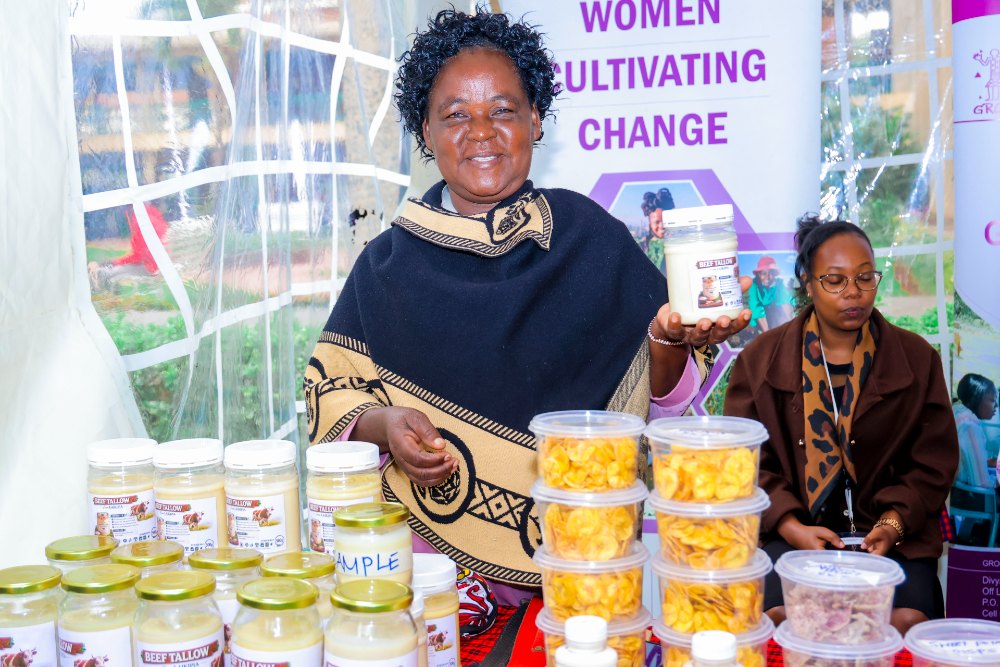
The challenge is that their contributions often go unrecognized. Women often work land they do not own. They can produce food without controlling the income it generates. They possess valuable agricultural knowledge yet remain absent from spaces where agricultural policies and budgets are decided.
This is why grassroots organizing matters. When women organize, individual challenges become collective issues. Their experiences can inform conversations with county governments, extension officers, and other decision-makers. Women transition from being the subject of agricultural policy discussions to becoming active participants.
Therefore, the presence of agricultural extension officers like John Kamau from Laikipia County in the side-event conversation was particularly important. His exchange with grassroots women demonstrated the value of a relationship in which agricultural knowledge travels both ways. “Extension officers bring technical expertise and connections to government agricultural systems. Farmers bring years of practical experience with their soils, crops, local climate, and communities,” Kamau concluded.
Individual experiences informing public policy
Kenya has a National Agroecology Strategy for Food Systems Transformation (2024–2033). This establishes a national framework for promoting agroecological methods. However, a strategy on paper does not automatically change what happens on a farm.
Implementation depends on what happens in counties and communities. This includes whether farmers can access support, whether public resources reach agroecological initiatives, whether local knowledge is recognized, whether markets work for small-scale producers, and whether women and young people have meaningful opportunities to participate.
Transforming food systems starts with changing farming practices. However, it also requires changing which knowledge is valued, who participates in decision-making, and what opportunities people can create through agriculture.