When Irene Sithole walked into the Harare International Conference Centre (HICC) for the Zimbabwe National Launch of the 16 Days of Activism against Gender-Based Violence campaign, she was more than just a delegate. As a woman living with a disability and a community advocate, she had high expectations, especially since the President of Zimbabwe was set to speak at the event, showing its importance.
Her participation in the launch through our S(HE) Matters project was a step toward strengthening her voice. This year’s theme, “UNiTE to End Digital Violence Against All Women and Girls,” lent added urgency to every discussion. For Irene and all other participants, it also reflected how the digital space, initially a bridge to opportunity, has become increasingly a place of harm.
A call for immediate action
The launch brought together a broad cross-section of Zimbabwean society. Government ministries, Members of Parliament, security sector representatives, independent commissions, civil society organizations, UN agencies, traditional and religious leaders, and the private sector were represented. The diversity of ages and genders in the room showed clearly the broad-based approach needed to address gender-based violence effectively.
In pre-recorded remarks that set a strong tone for the campaign, President Emmerson Mnangagwa called for a united national response. “Today is a timely call to action. It gives us an opportunity to take stock and reaffirm the protection and rights of women and girls. Much more must be done,” he said.
His message offered encouragement but also showed that commitments must translate into inclusive action beyond policy statements.
What women face
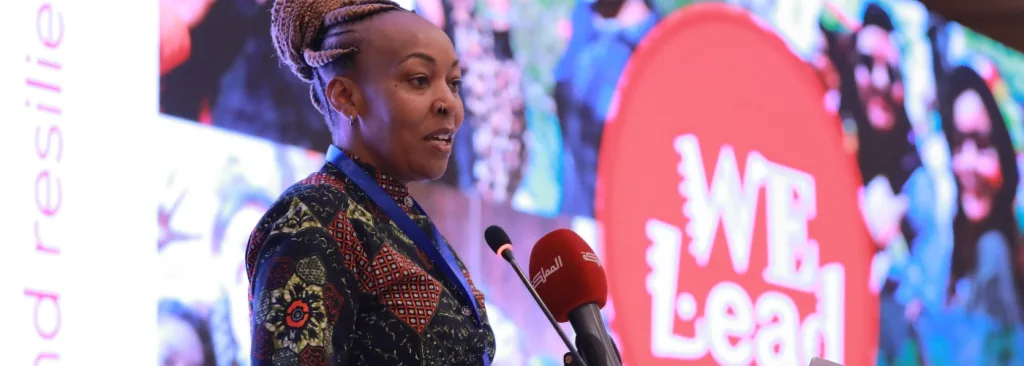
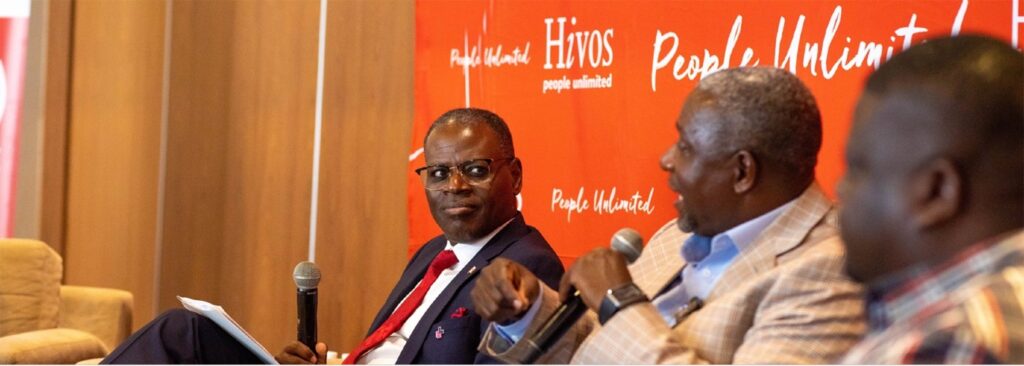
The panel discussion on digital violence exposed the growing dangers women and girls face in online spaces. Panelists shared lived experiences of cyber-abuse, harassment, and humiliation, and described how these attacks erode survivor confidence and often leave lasting scars.
Young journalist Ruvimbo Muchenje, invited to the launch by our partner Gender Media Connect (GMC), captured the reality many women face online. “It has been difficult to be in same spaces as men. Men can easily create content and share. It’s not the same for women journalists, for example. If I share a political story, men online will bully you for your looks, your past, or your former relationships and not the critical content you have developed. This is the major reason why women self-censor even though you have produced great content. I wrote a political story, and the comments were about a past relationship that I was once in. This is not what we expect when we go online,” she said.
Speaking for herself and GMC, Muchenje called for stronger legal protection for women and girls: “Digital violence must have its own statute in this country. We want a law that’s specific to cyber bullying to protect women and girls.”
Towards more community action
While the national launch was highly symbolic, with full government backing, its impact will be measured in communities and not conference halls. Irene observes that future launches could reach wider audiences by being held in public spaces such as stadiums and local centers. “The private sector, traditional leadership, and religious institutions must not only be represented, but actively engaged in dialogue and action,” she says.
Digital violence, as this year’s campaign theme underscores, must be addressed through sustained national strategies. As the launch concluded, Irene did not leave with a sense of closure, but with a renewed sense of responsibility. The 16 Days campaign, she says, is a call to intensify action year after year.
For women with disabilities, empowerment means ensuring that every battle they face – physical, emotional, economic, or digital – is matched with equal access to knowledge, protection, and power. As violence evolves, so too must the response!