The youth who keep local flavors alive
The story of Nur Chairulutfi from West Manggarai, Indonesia
The diversity of local foods around the world is under threat from the rise of instant foods and global culinary standards. In West Manggarai, East Nusa Tenggara, restaurants selling fast and foreign foods are growing like mushrooms. Meanwhile, traditional foods remain largely underpromoted. “Why should we, who belong to this land, fall behind? Why cannot we compete with them?” Ulfi asks rhetorically.
Nur Chairulutfi, better known as Ulfi, feels uneasy about the disappearance of local food diversity in big cities. In Labuan Bajo, West Manggarai, a popular tourist destination it is, for instance, far easier to find restaurants serving sushi, ramen, pizza, burgers, or fried chicken than a modest eateries offering local specialties.
Amid the surge of culinary globalization, local food must not remain just a nostalgic memory. Ulfi dreams that one day her products will be featured on the menus of restaurants and hotels in Labuan Bajo. “We want people who come here to taste the unique flavors of our land. To remember that this truly comes from us, from our own soil.”
This issue goes beyond taste. For Ulfi the disappearance of local foods also means the loss of traditional knowledge about how to grow, process, and celebrate food that has been passed down through generations.
Moreover, the decline of local foods has caused a dependence on imported or global food products, making communities vulnerable to food crises, especially when global supply chains are disrupted. “If not us, the young people, then who will speak up for local foods?” Ulfi says firmly.
In mid-2024, Ulfi and a group of young people in Gorontalo area of West Manggarai, were facilitated by the Pangan Bernas consortium to explore their area’s potential and opportunities. From that process emerged the idea of developing local food as a way to preserve community identity.
Ulfi and her friends went on to form a community called Nipu Laha Gami, which means remembering our homeland. The name is a blend of Manggarai and Bajo languages, reflecting the diverse identities within their area.
Traditional products
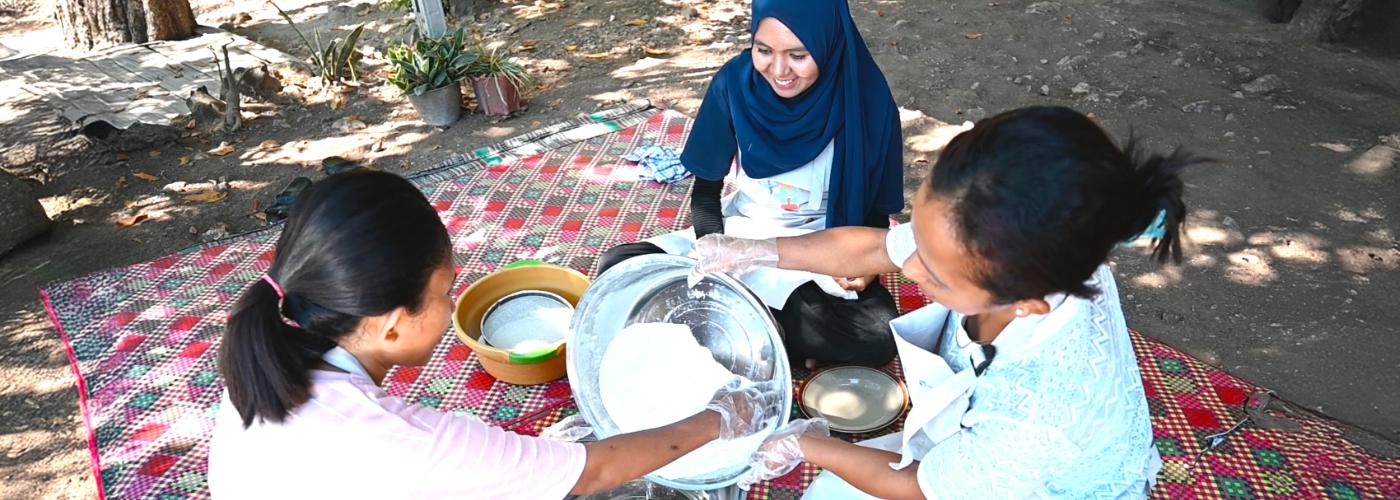
Nipu Laha Gami’s first product was “Kopi Tuk Gami,” traditional coffee roasted over firewood, then pounded using a mortar and pestle. This traditional processing method is meant to preserve its authentic taste, a legacy from their ancestors. The Manggarai-style coffee is paired with “Rebok Gami”, a simple snack made from rice flour and coconut, a common companion to coffee in local households.
Not long after these two products were introduced, another flagship product emerged: “Dendeng Ikan Gami,” a specialty made from local fish such as Juku Eja and Lembogor, purchased directly from local fishermen. Ulfi recalls how she and her friends once had to wait for hours by the shore just to get fresh fish. “Rather than selling the fish cheaply, it is better that we process it into dendeng (fish jerky). The fishermen benefit, and we add value as well”, she says.
Within Nipu Laha Gami, tasks are shared: some specialize in processing coffee, others are skilled at preparing fish, while still others handle packaging and promotion–like Ulfi herself.
This is where initiatives like Ulfi’s find their true relevance. By continuing to process local fish into dendeng or coffee using traditional methods, they are not only preserving flavors. They are safeguarding food sovereignty; the right of a community to decide what foods are produced, consumed, and passed on.
Ulfi realizes that, amid the surge of culinary globalization, local food must not remain just a nostalgic memory. She dreams that one day their products will be featured on the menus of restaurants and hotels in Labuan Bajo. “We want people who come here to taste the unique flavors of our land. To remember that this truly comes from us, from our own soil,” she says.
Through Nipu Laha Gami, Ulfi demonstrates that youth can be local food advocates. They are not only creating products but also generating job opportunities, supporting fishermen and farmers, and safeguarding culinary heritage from being lost to time.
Urban Futures, which operates in West Manggarai, positions young people as the main actors in shaping a healthier, fairer, and more sustainable food future.