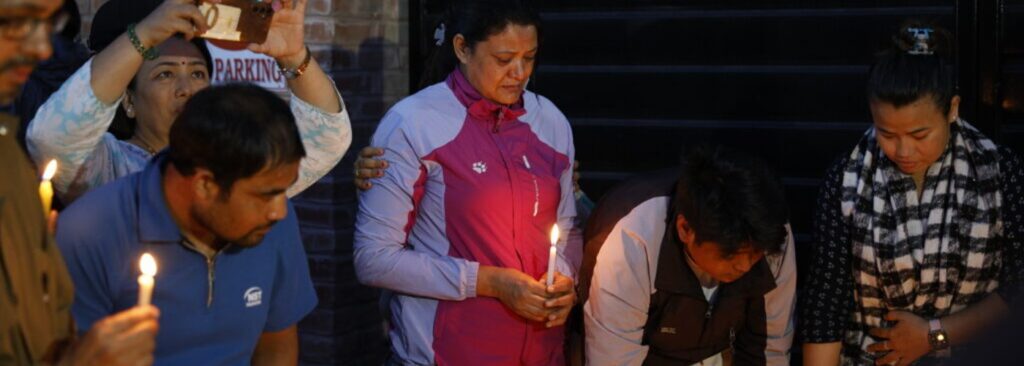
Last weekend in Berlin, an attacker drove into a group of people celebrating Pride. One person was killed and 29 were injured. This horrific attack shows us that the safety and emancipation of the LGBTIQ+ community can never be taken for granted. It is a stark reminder that governments must actively protect and support the rights of LGBTIQ+ people.
LGBTIQ+ rights under pressure worldwide
At Hivos, we see that the space for LGBTIQ+ people to be themselves is becoming increasingly restrictive worldwide. Through our EU SEE program, we monitor the enabling environment for civil society space in 86 countries. Civic space, or an enabling environment, is the ability or space for people and organizations to express themselves, organize politically, and advocate for their rights and freedoms. We identify restrictions early on and urge organizations and governments to take swift action.
Data from our program shows that violations of LGBTIQ+ rights and gender equality are rapidly increasing worldwide. Discriminatory legislation, hostile governments, and violence against vulnerable groups are becoming increasingly normalized. It reveals an alarming pattern: governments are actively working to roll back gender and LGBTIQ+ rights.
Restrictive measures and laws that undermine rights
Rights are being curtailed in numerous countries. For example, last May, Ghana’s parliament passed a stricter anti-LGBTIQ+ law that not only criminalizes homosexuality but also prohibits the promotion, sponsorship, funding, and support of LGBTIQ+-related activities.
Peru removed the term “gender equality” from its legislation, and Costa Rica withdrew from the LGBTIQ+ core group of the Organization of American States (OAS), which includes 35 independent states on the American continent.
In Hong Kong, a bill on same-sex partnerships has been stalled for years, while the largest Pride event was canceled for two consecutive years. In addition, government funding for LGBTIQ+ projects fell by 70% over a two-year period.
Cultural censorship
Censorship is an increasingly common weapon for LGBTIQ+ repression. For example, Paraguay’s Ministry of Education removed the word “gender” from all teaching materials. In Hong Kong, theater performances are being canceled, queer films are being censored, and playwright Candace Chong is being systematically blacklisted because of her queer work.
A worrying trend
These are just a few examples of the alarming signs we’re documenting through our program. “The trend we’re seeing is worrying,” warns David Kode, Program Manager of our EU SEE program. “Vulnerable communities are systematically deteriorating, while in most regions we monitor, there’s no sign of any positive policy change.”
According to the EU SEE data, this trend is visible worldwide and reflects an increasingly hostile climate. Kode states: “Conservative legislative agendas, discriminatory enforcement, and a lack of political will to protect vulnerable groups are fueling this. We’re seeing a frenzied, populist political culture that blames the victims.”