The dry forest of Manabí, in Ecuador, is a difficult, almost forgotten land. However, for Carlos Humberto, it is the source of delicious traditional dishes that just needs patience and love to flourish. He learned that for a dish to have the sense of place the French call “terroir,” you must love the land that produces its ingredients.
Carlos Humberto is the eldest son of a family of farmers. He grew up surrounded by the aroma of the corn tortillas that his mother sold to pay for his studies and remembers his great-grandparents sharing the harvest with their neighbors. However, at the age of 17, circumstances forced him to migrate to Esmeraldas. There, while working in a water purification plant, he studied agricultural technology and fell in love with Ecuador’s coastal cuisine, learning the secrets of how to cook with coconut and the aromatic local variety of cilantro called chillangua.
After the 2016 earthquake and thanks to a scholarship at the Iche school of food and hospitality, Carlos Humberto decided to return to Manabí and transform his home. Like a true “Montubio” (farmer from the Ecuadorian coast) who goes on a journey but always, somehow, returns to his homeland.
Reclaiming forest and identity
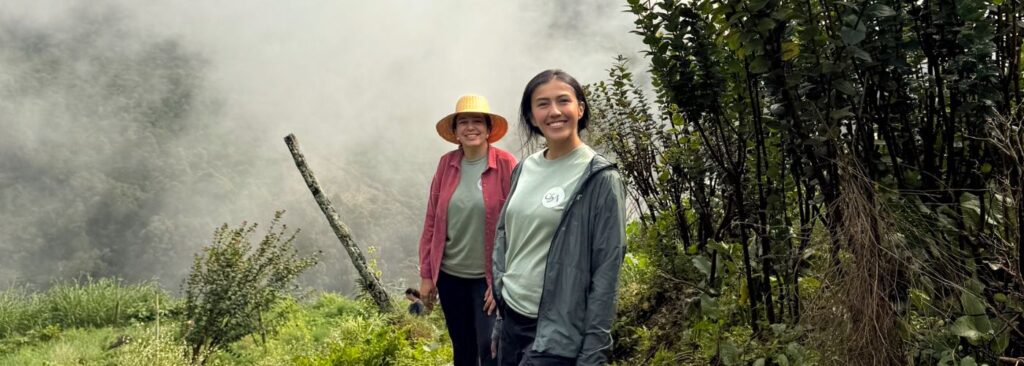
Carlos Humberto and his family turned what was once deforested land into Montubio Viajero (“Traveling Coastal Farmer”), a restaurant that doubles as a food forest and a space for cultural dissent. Here, Carlos Humberto applies his studies to grow achiote (annatto), beans, and fruit and timber trees, always leaving, as he says, a “percentage for the birds.”
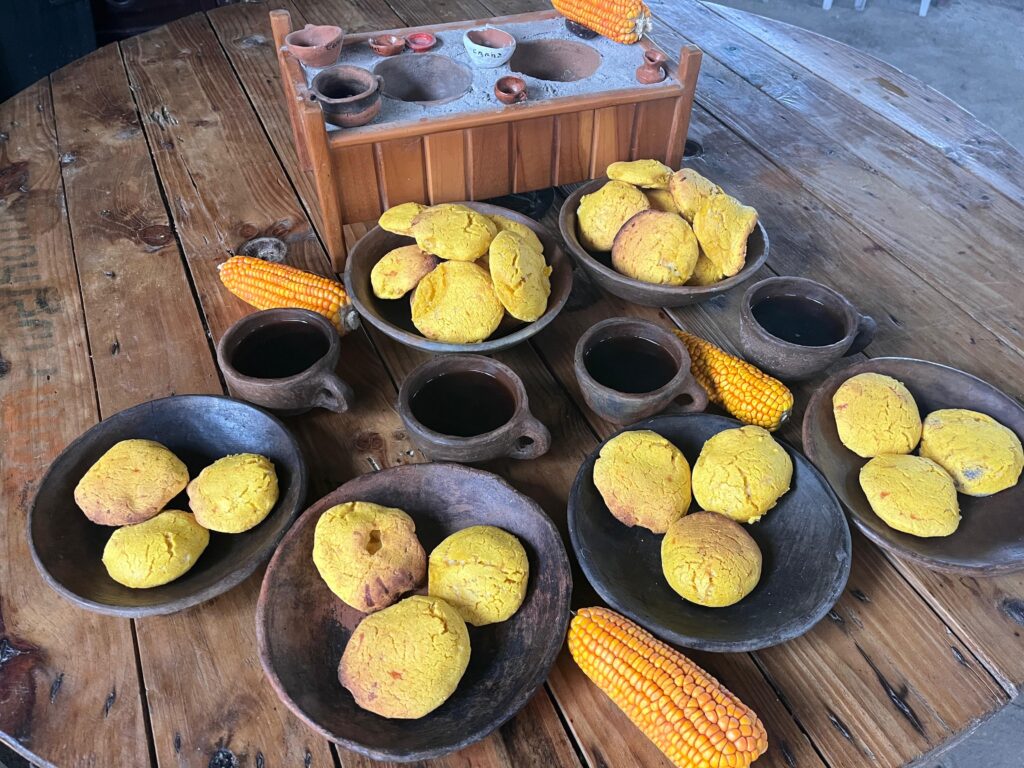
His signature product, artisanal achiote paste, is made the old-fashioned way: in a wood-fired oven, cooked in clay pots. This flavorful spice blend is a traveling ingredient that has already reached tables in big cities and luxury restaurants, connecting the Montubio identity with the world.
“Many thought I was crazy, that I couldn’t do it,” Carlos Humberto recalls. In a region where people prefer to cut down trees rather than plant them, he stood his ground.
Montubio Viajero as an inspiration
Today, Montubio Viajero is a model of circular economy and food sovereignty. The family cooks with what they grow: oregano, chives, chillangua, and their own achiote paste, which makes the entire Montubio Viajero project evoke grandma’s house and the Manabí identity.
“My project is a space where nature can be enjoyed, where people and birds can eat everything that is produced there. If you have a dream, it is possible; it is not easy to start, but the important thing is to take the first step.”
These types of initiatives represent the essence of the Urban Futures program: connecting with nature, roots, and the culture that grounds it all. Carlos Humberto demonstrates that the land belongs to those who know how to work it with knowledge and faith. As he says, everything comes in its own time, and today is the time to harvest the pride of being a Montubio.