At the foot of a hill in Makueni county, Kenya – where seasonal rivers swell during the rainy season, cutting off homesteads from the rest of society – a group of resilient women gathers, finding strength in unity. The Joyful Women’s group rehabilitates deep gullies that threaten the environment and their livelihoods. But their efforts go beyond conservation; they safeguard women and girls whose daily chores have been made risky by climate change.
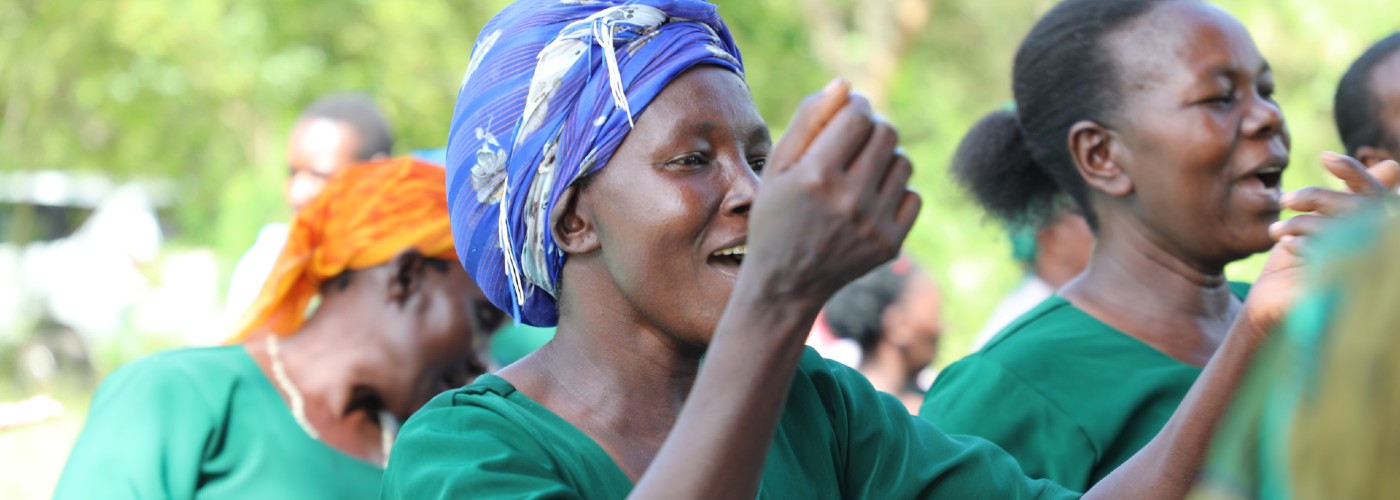
Started by only a handful of women in the community, Joyful Women now consists of 30 members giving each other social, economic, and emotional support. The women – some of them single mothers and widows – bear the daily responsibilities of care for their family while experiencing economic hardship. They came together to jointly save money, starting with table banking, a common way in Kenyan villages to save and borrow money. “Since February we have saved 200,000 Kenyan Shillings,” Joy Wambui, the trustee of the group, says. “This has been used to help some of the women pay for children’s school fees, healthcare, and buying livestock. The loans will be paid back with interest later; in this way we empower each other.”
New challenges
In recent years, however, a new challenge has presented itself. Women and girls are usually tasked with fetching water at water streams in valleys called gullies. But this has become more dangerous due to deforestation. “The trees on the hills, which used to slow down the water and reduce its volume, are mostly gone, causing soil erosion. Rainwater now flows very fast down the hill, deepening the gullies,” Joy explains. “It makes it more dangerous for us women and girls to access water points when it rains, as the gullies deepen and widen more with each rain drop.”
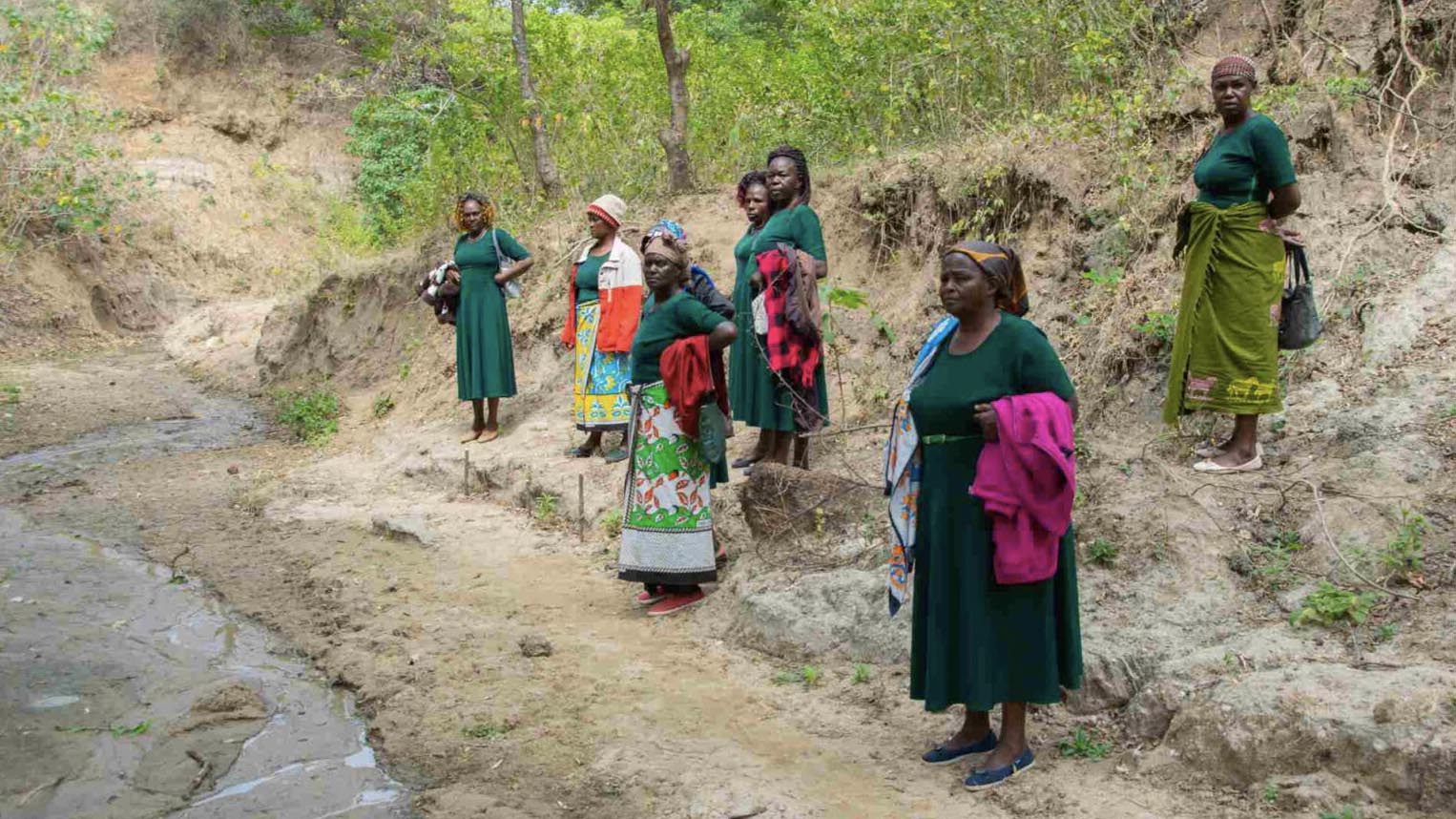
Women from the group standing in the Gully. Photo: Jaël Poelen / Hivos
The group is working to reduce the speed of the water and stop gully erosion. To keep the soil intact, restore land and narrow the gullies, they have worked on terracing, placed sandbags, and grown plants like sisal and Nappier grass. This way the gully can fill up and water will be preserved longer, allowing it to infiltrate into the soil. This is especially important with climate change, which makes the droughts last longer and the rains more intense.
Small grant from the Next Level Grant Facility
From the Voices for Just Climate Action program, the Joyful Women received a small grant through the Next Level Grant Facility. They used it – together with their own manual skills and Indigenous knowledge – to construct a gabion: a wall in the gulley that slows the waterflow during heavy rainfall.
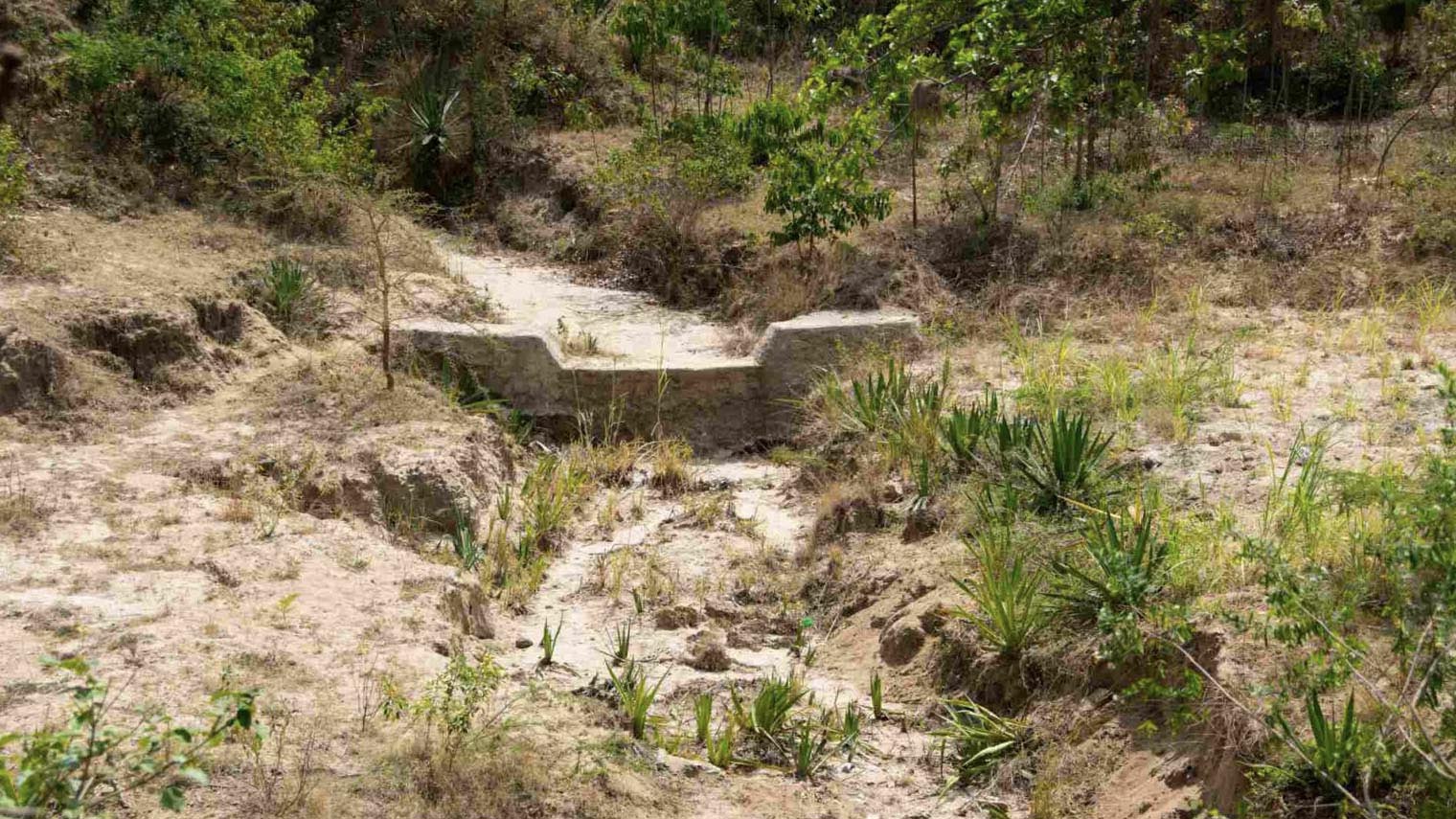
The gabion, constructed with the NLGF grant, to decrease waterflow. Photo: Jaël Poelen / Hivos
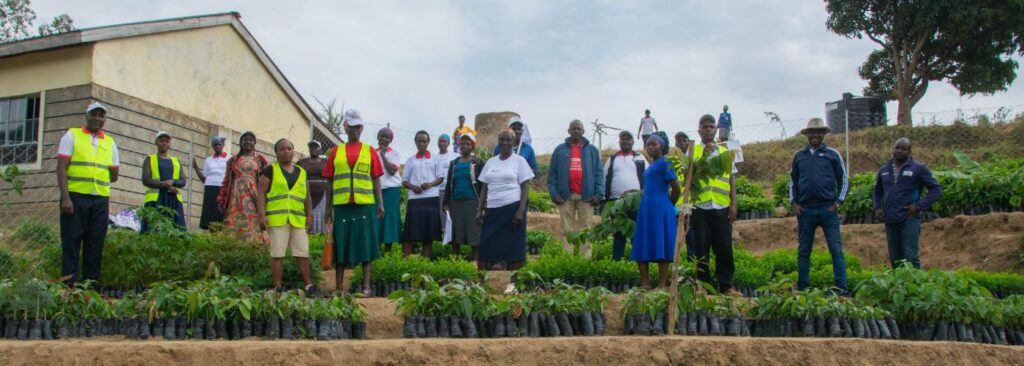
Joy explains that the grant also created job opportunities for the women. “With the grant of around 1500 USD, we paid the women in the group three dollars a day to construct the gabion and plant trees.” With the NLGF grant, they also set up a tree nursery to sell seedlings to farmers, further increasing their income.
The NLGF-mechanism delivers climate finance to the most local level. This is because truly effective climate finance should be accessible to local groups and communities without bureaucracy, long processing time, and language barriers. “Even with the little capacity we had to write and apply, we were able to take this opportunity,” recalls Joy with a smile. “What motivated us is that we could write in our local dialect and still be able to get the funding.”
Looking ahead
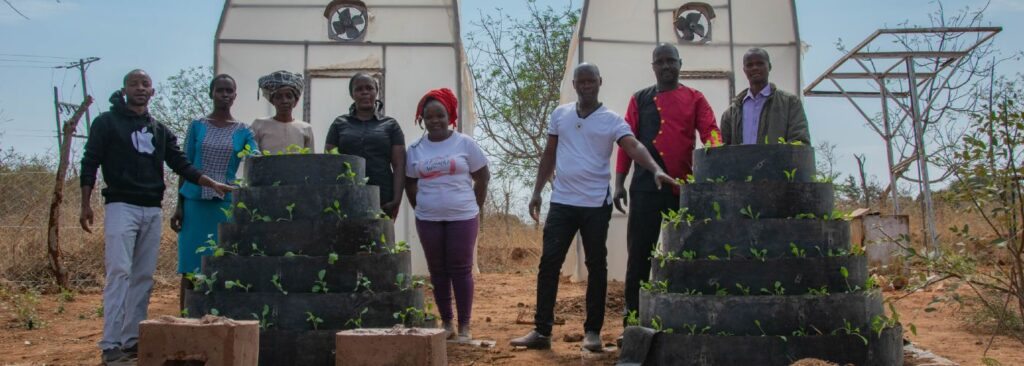
“We want to expand to other areas to reach out to more women and assist other women’s groups,” Joy adds when asked about future plans. “We also wish that our children don’t have to go down the gullies anymore to fetch water but can access it directly from our home. Therefore, we are planning to have tanks that collect rainwater, which can also be used to water our kitchen gardens.”