The Urban Futures program in Southern Africa is working to build inclusive, sustainable and climate-resilient urban food systems. At the heart of this effort is a commitment to young people: supporting them to collaborate, influence decision-making and seize opportunities within the food sector. A key driver of this vision is a network of youth innovation hubs, acting as catalysts for change in the cities where they operate.
This October, the final youth innovation hub was opened in Mutare, Zimbabwe, completing a regional network of hubs between Chongwe and Kitwe in Zambia, followed by Bulawayo and Mutare in Zimbabwe.
Youth innovations hubs
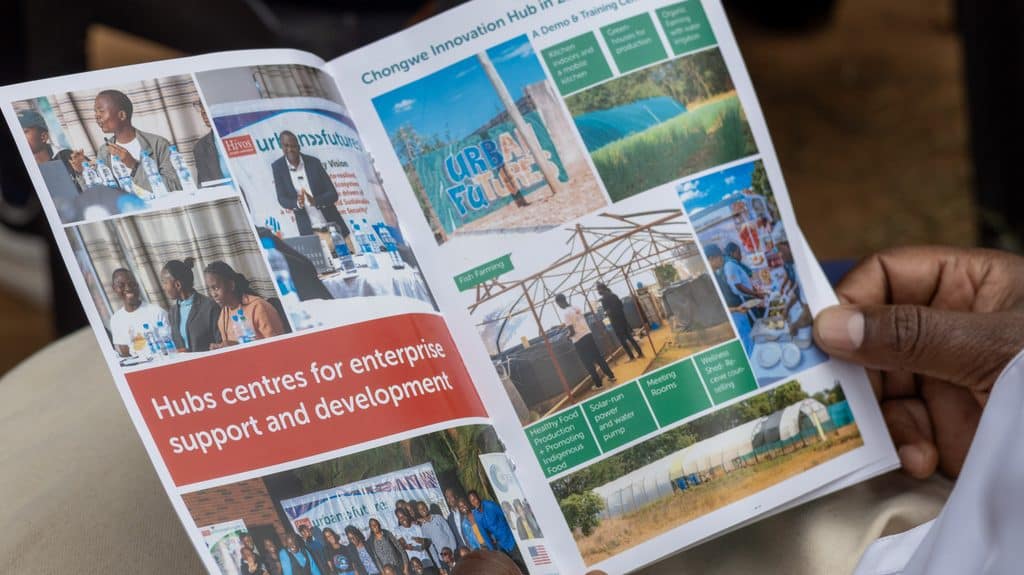
The hubs combine technology, market access, financial inclusion and climate-smart agricultural practices to transform urban food systems. The hubs serve as spaces of innovation and collaboration, developing scalable and replicable models that can be adapted to different urban landscapes. They help young agri-preneurs thrive while contributing to local food security.
Regional Coordinator Rumbidzayi Cordelia Machimbirike explains: “The hub is designed to support youth-led entrepreneurship, strengthen networks and partnerships, facilitate access to knowledge and investment opportunities, and create a space where young people can contribute solutions to urban challenges.”
The hubs also integrate youth volunteers through a structured engagement strategy that provides hands-on experience, skills development and leadership opportunities. The volunteers contribute and improve in areas such as mentorship, policy advocacy and market outreach, ensuring young people play an active role in transforming food systems.
Connecting a global vision with local leadership
The innovation hub structure is a unique feature of Urban Futures within 4 cities in Southern Africa. It offers valuable lessons for the other Urban Futures cities around the world, demonstrating that local innovation can unchain an urban farming revolution.
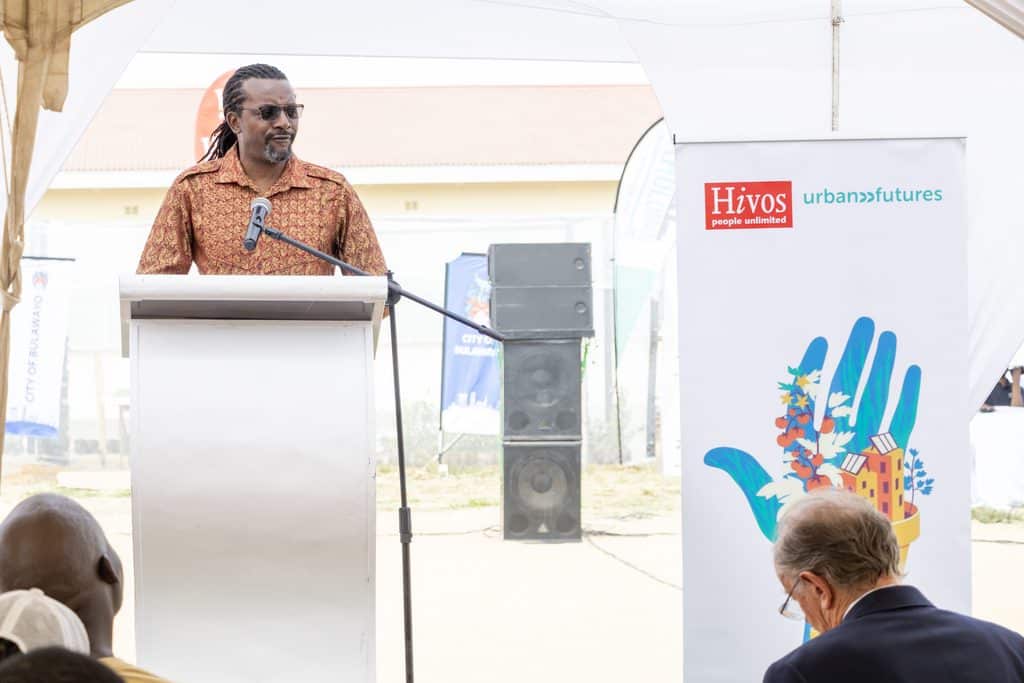
Speaking at the launch of the Mutare hub, Hivos Global Head of Programs Tanja Lubbers stressed the importance of placing young people at the center of urban food governance: “Youth are the future of our food systems! They are leading the transformation we see in urban cities today. Spaces like all these hubs, that we have launched in Kitwe and Chongwe in Zambia and Bulawayo and Mutare here in Zimbabwe, bridge digital technology, climate-smart agriculture and civic engagement. They give young innovators the practical tools and decision-making platforms required to build climate-resilient cities.”
Hivos Portfolio Manager Africa Joy Mabenge highlighted the importance of collaboration and local ownership for long-term sustainability: “While Urban Futures is being implemented in cities across Zimbabwe, Zambia, Indonesia, Ecuador, and Colombia, the Hub model is a unique feature of the program in Southern Africa. To date, Zimbabwe and Zambia are the only program countries that have established dedicated Urban Futures Hubs. These Hubs have positioned each of the 4 cities as part of a pioneering approach within the wider Urban Futures program. We look forward to the innovations and partnerships that will emerge from the Hubs and contribute to the broader development of transformed food systems locally.”
Youth voices from the ground
For the young people, the hubs represent a shift from surviving to thriving. They provide opportunities to young agri-preneurs, not only to test new innovations and ideas, but also to connect with likeminded agro startups.
In Kitwe, Mpundu Mwelwa has re-established himself through Insaka Innovation Hub. Graduated as a mechanical engineer, he had never considered a future in agribusiness. “I started with a small backyard garden, but since I started coming here [Insaka Hub], I have discovered different modes of production. I have learnt from the various practices here how to make use of small spaces for full production. I’ve stepped up my vegetable produce and tested new prototypes such as how to manage and segment waste products.”
Beyond agricultural innovation, the hubs also invest in soft skills development. Tendai Paul Manyeza, founder of Amalgamated Freight Solutions in Mutare, credits the hub’s mentorship training, strengthening skills and confidence of young starters. “Through the Urban Futures mentorship masterclasses, I was able to develop my first business pitch which nurtured me into getting a 360 degrees overview of how I’m supposed to run my business.”
Scaling up for the future
Each hub launch, investors and key stakeholders such as city mayors are invited, creating opportunities for young agri-preneurs to showcase their innovations to influential stakeholders in each city.
In Bulawayo, Zimbabwe, Mayor David Coltart expressed his admiration for the transformation of a neglected city council facility into the Isiziba Youth Innovation Hub. “I’ve had to go over my prepared speech here and say I am inspired,” he said in his remarks. “We need to see the same done to the other 17 youth centers that we have in the city that are lying stagnant.”
Ultimately, the success of the innovation hubs will be measured by their impact on local food systems and their ability to inspire similar initiatives elsewhere. With the commitments made at hub launches, we will see cities where young people have greater access to healthy food. But young people also get more ownership, with entering the agriculture supply chain they will be able to shape future food ecosystem innovation.