Colombia has signed the Escazú Agreement, a treaty that gives citizens the right to access environmental information, participate in decision-making and seek justice in environmental matters. For many Indigenous and Afro Colombian communities, these rights have long been out of reach. New findings from the Weaving Governance report show that this is starting to change.
The Escazú Agreement applies to 33 countries in Latin America and the Caribbean. It guarantees access to environmental information, public participation in projects and access to justice in cases of environmental harm. It is also the first treaty in the world to explicitly recognize and protect environmental human rights defenders.
Turning theory into practice
Laws only make a difference when they are put into practice. Indigenous and Afro Colombian communities are among those most affected by deforestation and environmental conflict, yet they often face the greatest barriers in claiming their rights. They face serious security risks and deal with inequality and discrimination. In addition, many were unaware of their rights or did not know how to assert them.
“From listening to people in these regions, it is clear that although the Colombian government has signed the agreement, many of the most vulnerable communities are still not aware of it. That lack of awareness makes it difficult to achieve real change.” – team Radio Nois (local partner)
Positive change is underway
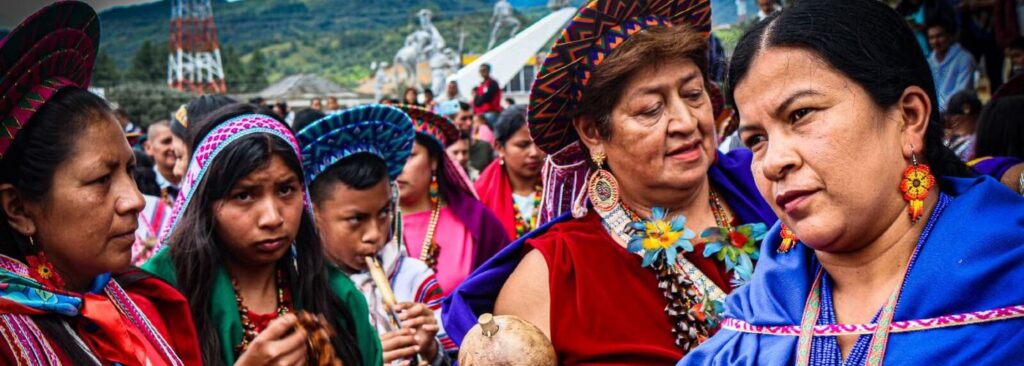
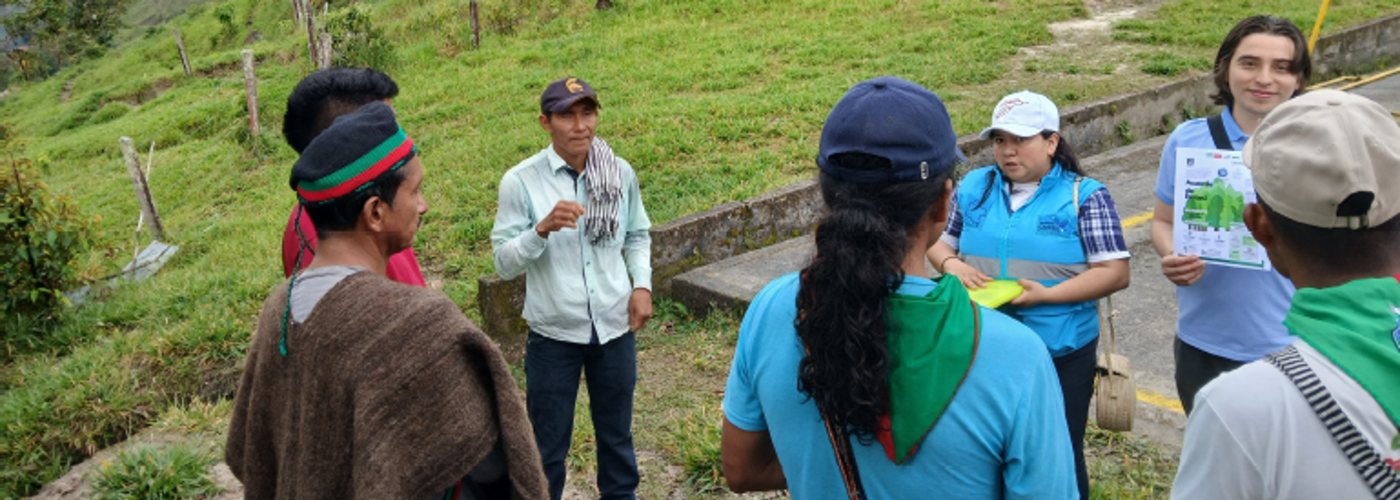
That gap is now beginning to close. Through the program Living Forests, Strong Communities, communities in ten regions are working with civil society and government institutions to put Escazú into practice. In the first six months, more than 250 community members and over 80 public officials received training.
The first results are already visible. Awareness of environmental rights among participants has increased. Communities are not only identifying challenges, but they are also putting forward solutions. These include faster protection mechanisms for environmental defenders, stronger local implementation of policies and practical tools to improve access to information and justice. These proposals have been shared with the Colombian government as part of the national roadmap for implementing Escazú.
“For Indigenous communities, protecting the territory is not only about the environment. It is a spiritual and cultural responsibility. The territory is part of who we are.” – team Asociación Pumamaki (local partner)
Major challenges remain
At the same time, the report shows that significant challenges remain. Authorities often fail to act, or do not act in time, on reports of human rights violations or environmental crimes. People who protect the environment face serious security risks. Communities do not always receive clear information in a timely manner, and their influence on decision-making is limited. Laws exist, but their implementation is often unjust and too slow.
Change starts with people
The experience in Colombia shows that change does not start with policy, but with people. When communities understand their rights and have the tools to act, commitments begin to take real meaning in practice.
For Hivos and its partners, the next step is to build on this progress. This includes expanding the use of digital tools for community-led forest monitoring and strengthening the link between local, ancestral knowledge and decision-making.
The Escazú Agreement has the potential to transform how environmental decisions are made. This report shows that change is already underway, but sustained commitment is needed to make it last.