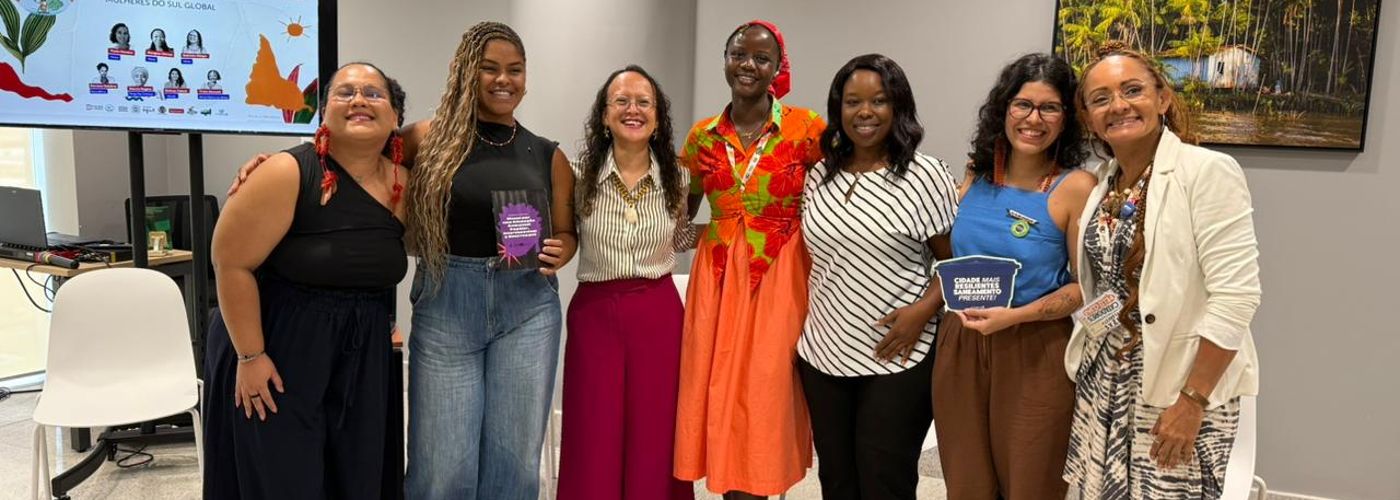
A few days have passed since the end of COP30, held in Belém do Pará, Brazil. Without a doubt, it was not just another COP. Just bringing these global climate negotiations to the heart of the Brazilian Amazon was a political declaration in itself by the Brazilian government. And notably, it was also an urgent call to examine the climate crisis issued from the very places hardest hit by impacts and losses: the territories and bodies of the Global South.
By: Gabriela Melgar, Regional Communication Officer, Hivos Latin America
In recent years, conversations about climate change have primarily focused on an endless stream of scientific reports and data, and rightly so. We have already surpassed the 1.5°C global temperature threshold that had been set as the limit, and this will have an increasing impact on ocean levels and ever more extreme weather events. Climate mitigation and adaptation plans are also being discussed, but less is said about the impact on the daily tasks that sustain life and on those who literally put their bodies into care work: women and girls.
In her publication Wages Against Housework, Silvia Federici writes: “They say it’s love. We say it’s unpaid work.” This statement undoubtedly makes us reconsider how the patriarchal and capitalist system has constructed a narrative that normalizes care and domestic tasks as “love” or “as something women naturally do.” This hides the fundamentally economic and social nature of women’s work and the fact this unpaid labor sustains our social fabric and even life.
Each extreme weather event increases the need for care, and this translates into exhausting burdens for women and girls, ranging from caring for sick family members and fetching water to rebuilding homes and providing emotional support when everything is lost. These situations are becoming increasingly common with the extreme weather events we are currently experiencing, so then a crucial question arises: Who cares for the caregivers?
The care economy: the unseen part of climate action
One of the least discussed aspects in negotiation spaces, yet one of the most urgent for daily life, is the care economy. Those who provide care, mostly women, many of them racialized or living in rural contexts, and faced by multidimensional poverty, are the ones who sustain the social fabric that allows for an immediate response to climate crises.
However, this care work remains unrecognized, unpaid, and far from being prioritized in global climate policies. According to UN Women data, women already dedicate an average of 2.8 hours more per day than men to unpaid domestic and care work. The daily reality for women demonstrates that, during droughts, floods, hurricanes, or fires, the “normal” amount and intensity of care work increases exponentially, forcing women to absorb both the costs of the climate change-induced overload and the impact it has on their own mental and emotional health.
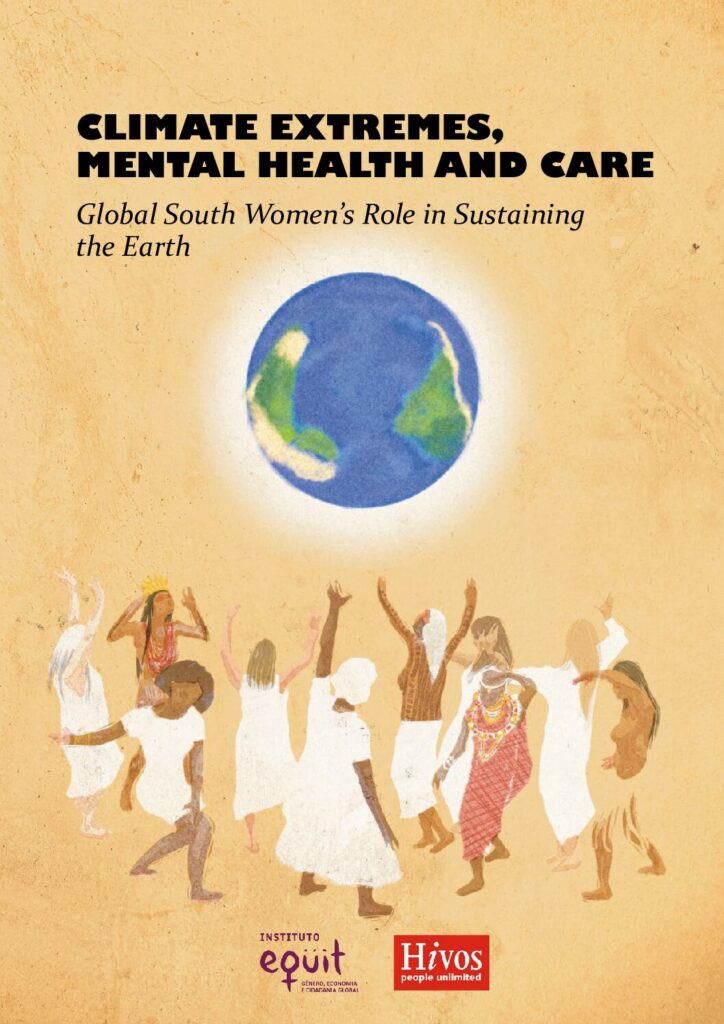
Our recent publication, “Care and Climate Solutions,” shows precisely how climate events intensify pre-existing inequalities and increase the care burden in vulnerable households, especially in countries of the Global South. Ignoring this factor is tantamount to designing climate policies that neither respond to nor address the local needs and realities of women.
Intersectionality as a commitment
Talking about climate justice means recognizing that not all bodies, territories, and economies face the impacts in the same way. Women, Indigenous peoples, Afro-descendants, LGBTIQ+ people, and youth are not only on the front lines of climate change impacts; they are also on the front lines of already existing solutions emerging from their homelands.
Intersectionality allows us to understand how race, gender, class, age, geographical location, and other factors intersect to deepen inequalities. At COP30, women made it clear that intersectionality should not be a footnote. It must be a perspective that includes women’s real needs in confronting the climate crisis. Women also made it clear that this crisis is not only environmental; it is political, economic, social, and profoundly structural.
For community feminist Lorena Cabnal, the categories of territory, body, and land are central to understanding that women disproportionately bear the impacts of extractivism and the climate crisis itself. These impacts affect both their bodies—in the form of exhaustion, intensified caregiving, and violence—and their homelands, with water scarcity, land depredation, and biodiversity loss.
Solutions from women, youth, Indigenous peoples, and territories
While major emitters and sectors that have historically benefited from extractive models continue to postpone commitments or revise documents and deflect responsibility under the narrative of “greenwashing,” real solutions are emerging elsewhere.
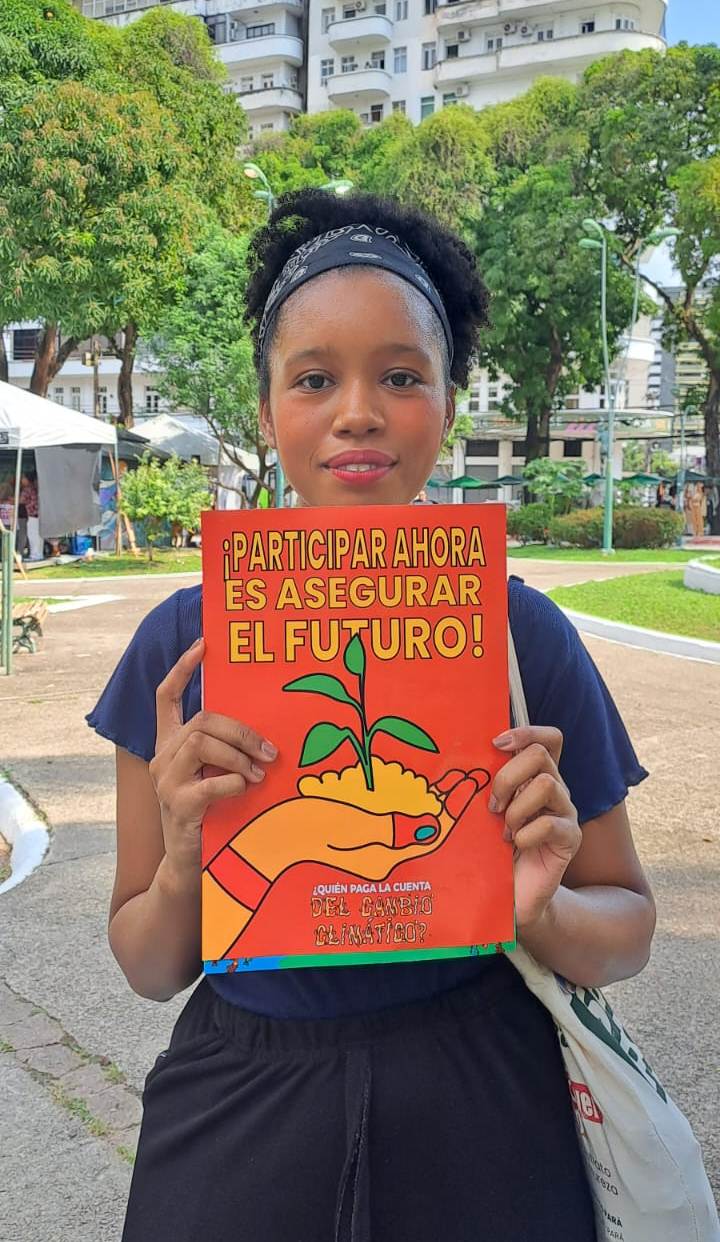
It is young women, Indigenous, Afro-descendant, and rural communities who are shaping a people’s climate agenda, deeply intersectional and rooted in gender justice, anti-racism, and territorial rights.
Young people are promoting new forms of organization, challenging anti-rights narratives, and proposing alternatives that respond to the real priorities of their communities, whether urban, peri-urban, or rural. Their collective leadership is essential to transforming the underlying inequalities that the climate crisis reveals and increasingly deepens.
The COP must clearly accept this reality: people in the Global South cannot continue to pay for a climate crisis they did not cause by putting their lives, labor, and time on the line. Recognizing and strengthening the organizational power of young women and communities is not just a matter of representation; it is and will be the only way to build just and sustainable climate responses. And finally, let us not forget: there will be no climate justice without gender, class, racial, and territorial justice.