For a long time, life on Zimbabwe’s commercial and rural farms has been dictated by an unwritten rule: men lead and women work. The men are responsible for the bigger decisions both at work and at home, while the women are relegated to the back bench.
For Dorothy Inusa, a farm worker with years of experience, this has been her daily reality. “To be honest, I used to think women’s rights were just about trying to be equal to men, so I wanted nothing to do with them,” she admits. “I believed men are men, that’s just that, and we simply couldn’t be the same.”
The journey to leadership and empowerment
Like thousands of women in agriculture, Dorothy’s days are a cycle of multiple duties. Farm work is punishing, but for most women, the shift never truly ends. With wages barely enough for household expenses, domestic help is unaffordable. Most women are just expected to work the fields all day, only to return home to cook, clean, fetch water, and care for the family.
With all this exhausting work, leadership may have felt like a distant, unnecessary burden for Dorothy and most women at these farms. “Women found leadership positions too demanding,” she explains. “They took up too much time. Besides, there was a deep belief that men just make better leaders. There was even a lack of trust and respect between the women themselves.”
But then she met the General Agriculture and Plantation Workers’ Union of Zimbabwe (GAPWUZ), a long-term partner of Hivos’ women empowerment programs and currently part of the S(HE) Matters program.
Dismantling the barriers
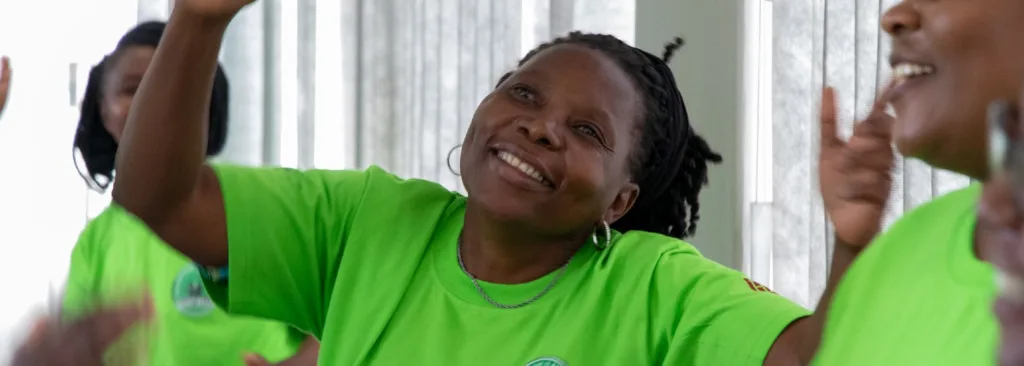
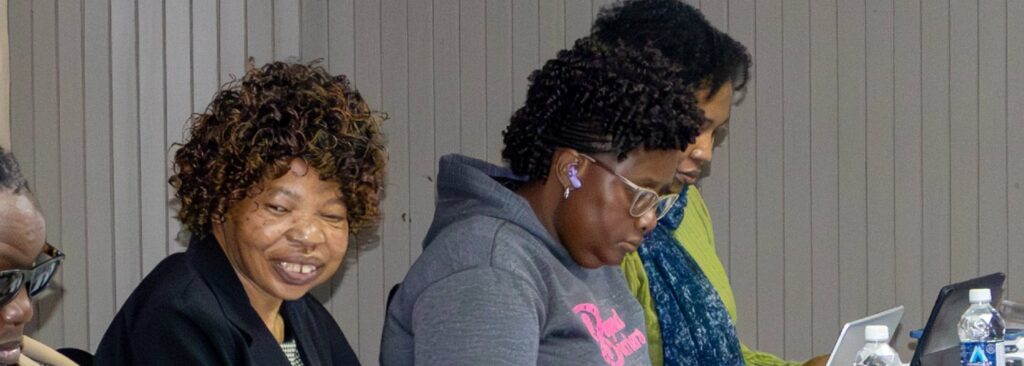
GAPWUZ and S(HE) Matters invited the farm workers for training on advocacy. This was designed to help the workers with leadership skills and develop an ability to negotiate with farm management. The workshops also let Dorothy and her peers see their reality through a completely different lens.
They learned that leadership wasn’t a gendered trait, and that equal work demanded equal pay. The program tackled everyday vulnerabilities that hold women farm workers back. They learned how to draft workplace sexual harassment policies to ensure their safety and use mental health awareness to cope with the crushing weight of their dual roles.
The training also included practical, sustainable skills that could also earn them extra income, such as making household products and reusable sanitary pads to use at home or sell for profit.
As their knowledge and skills grew, Dorothy and other women started campaigning for the rights of other women around them.
Growth and involvement
Looking at how far she has come, Dorothy attests to having witnessed a widescale transformation over the years. The culture of isolation and self-doubt among women farmers is crumbling.
“The most significant change is that women are now able to speak up for themselves without fear,” Dorothy says. “The days of not trusting one another are becoming a thing of the past. Now, women actively encourage each other to improve the livelihoods of their families and the community at large.”
Dorothy’s dedication to lifting up others recently garnered her an Award of Excellence from S(HE) Matters for her leadership in campaigning for women farm workers’ rights.
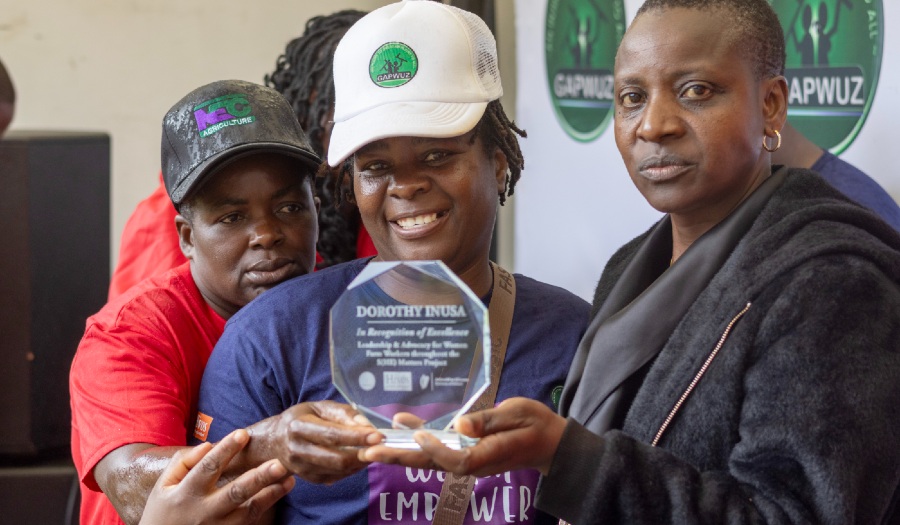
Creating new pathways
For Dorothy, the award is a beacon for every woman who currently has her head bowed over crops.
“I feel so great to have broken new ground, paving the way for other women to believe in themselves,” she says. “What men can do, women can do even better; and we do it with the family and the entire nation in mind. I want every woman in the farming community to know that nothing is impossible. The sky is the limit.”
The impact of S(HE) Matters’ initiative is Dorothy’s new daily reality. From a woman who once dismissed women’s rights, she has become a champion of the movement.
When asked what she would say to the younger generation of women just stepping onto the path of leadership, Dorothy says: “Fear not! Be encouraged, do not drop the baton, and believe in yourself. Keep improving yourself physically and academically, for a worker who is proven is never ashamed. Go warrior, go! Shoulders up, chest out, and march like a soldier. Cheer yourself up!”