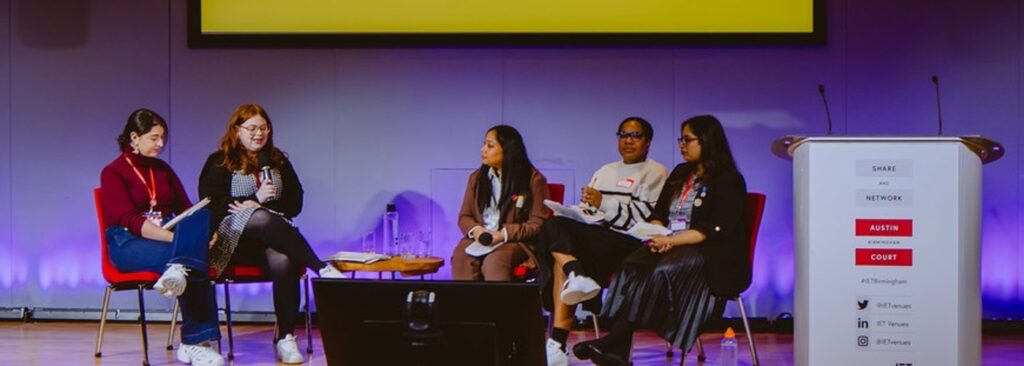
Around the world, hard-won gains for women’s rights are under pressure. And not only from the global backlash against these rights. Civic space itself is shrinking. Many different anti-rights movements are growing louder and more organized. In the end, young women and LGBTIQ+ communities are facing not only discrimination and exclusion but also increasing risks for taking action to claim their rights.
What does it mean for women lead in such a moment? The end-term evaluation (ETE) of the We Lead program shows that even in complex and hostile environments, young women from marginalized communities are not only participating in change, but they are also leading it.
We Lead evaluation: a program rooted in lived realities
We Lead, implemented between 2021 and 2025 across nine countries in Africa, the Middle East, and Central America, set out to strengthen the influence and position of young women whose sexual and reproductive health and rights (SRHR) are most marginalized. They included young women living with HIV, young women with disabilities, LBTI+ young women, and young women affected by displacement.
What made We Lead stand out was its recognition that these identities are not experienced in isolation. The program embraced an intersectional approach, acknowledging that young women often navigate multiple, overlapping forms of discrimination.
The evaluation confirms that this approach was not only relevant, but necessary. By addressing individual agency, social norms, healthcare access, and policy environments at the same time, We Lead responded to the real, interconnected barriers young women face.
Where change was strongest: leadership and capacity
Among all outcomes, capacity strengthening (individual and organizational) emerged as the program’s most significant success. Young women reported increased confidence, stronger resilience, and greater ability to advocate for their rights. Organizations experienced meaningful growth, from improved financial and administrative systems to wider inclusion of rightsholder voices in decision-making. But beyond institutional strengthening, something deeper shifted.
Young women who had previously been excluded from conversations about their own bodies and futures began shaping those conversations. They became advocates, organizers, and leaders within their communities and movements.
The power of collective action
At the center of We Lead was the Communities of Action model, which brought together organizations and groups that had often worked in isolation. This model fostered solidarity across different identities and experiences. It created spaces for shared learning, mutual support, and joint advocacy. It also enabled many grassroots organizations to access substantial funding and capacity support for the first time.
This resulted in a stronger network of collaboration amongst all the individual organizations involved. Notably, 94 percent of participating organizations expressed a desire to continue these networks beyond the program, a clear signal of their value and relevance.
Shifting systems, even in difficult contexts
The evaluation also points to progress across public awareness, healthcare systems, and policy engagement, although outcomes varied depending on context.
In healthcare, the program contributed to improved attitudes among providers and better access to services for marginalized groups. Through public awareness, youth-led campaigns amplified voices that are often excluded from mainstream narratives. Across some countries, these efforts reached millions.
Policy change proved more complex. While there were meaningful advances in certain contexts, progress was often shaped, and sometimes limited, by political realities. In response, many partners adapted their strategies, focusing on local advocacy or engaging in regional and global platforms when national spaces became restrictive. This adaptability stands out as one of the program’s key strengths.
Knowledge that continues to guide movements
Beyond immediate outcomes, We Lead leaves a critical body of knowledge that continues to support feminist movements globally.
The feminist transformative leadership guide, We Lead with Power, is both a practical and thoughtful resource for young feminist leaders. It centers lived experience, peer learning, and collective growth, offering a framework for leadership that is inclusive, grounded, and transformative.
Equally important is the We Lead Safety and Security Training Manual, which responds to the increasing risks faced by activists and organizations working on SRHR and gender justice. The manual provides guidance on risk assessment, digital and physical security, and safeguarding practices, helping movements operate more safely in challenging environments.
A legacy with both strength and urgency
The evaluation is clear about the program’s achievements, but it is equally honest about the challenges ahead.
Backlash against gender equality, restrictive legal environments, and limited resources still dominate the lived realities of rightsholders. Some gains, particularly at policy level, remain vulnerable to reversal. In certain contexts, rightsholders reported feeling exposed or at risk, highlighting the need for stronger and more proactive safety mechanisms.
However, there is also a broader concern. The program concluded at a time when sustained investment in feminist movements is still urgently needed. Without continued support, there is a risk that progress made could stall or be undone.
Yet even within this uncertainty, one thing is clear: the foundations laid by We Lead form the solid bedrock for successful new feminist initiatives in the future.
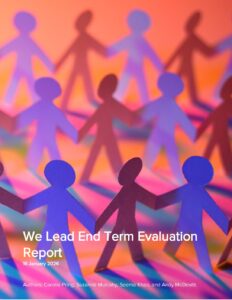
NB: While a comprehensive version of the End-Term Evaluation report exists, including detailed data and analysis, it is not publicly available to protect the privacy and safety of participants. We are happy to share it with relevant stakeholders upon request.