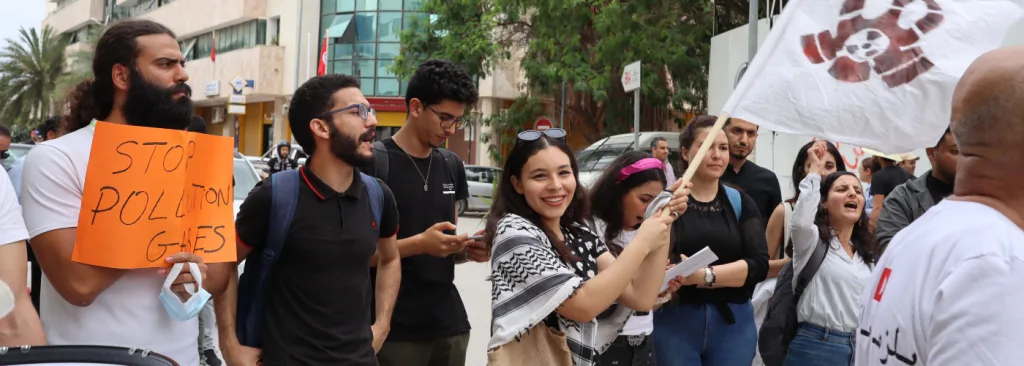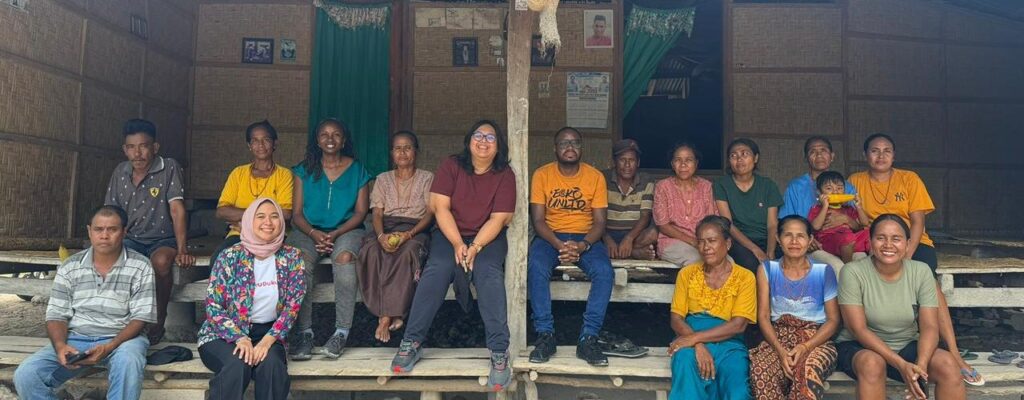
The Voices for Just Climate Action (VCA) program ran from 2021 to 2025, implemented by Hivos and alliance partners in Brazil, Indonesia, Kenya, Tunisia, and Zambia. Our core assumption was that communities on the frontlines of the climate crisis already held the knowledge, leadership, and climate solutions the world urgently needs. Five years later, we know we were right.
By Job Muriithi, VCA Global Planning, Monitoring, Evaluation and Learning Officer at Hivos
We discovered that VCA’s real job was to help create the conditions for community knowledge to matter – through platforms, networks, credibility, and access to decision-making spaces. VCA was a climate program. But it was also, in Hivos’ understanding, a civil and political rights program. Because the freedom to organize, to advocate, and to be heard is inseparable from the freedom to survive a changing climate.
Through VCA, Hivos supported 87 civil society organizations to advance climate justice – more than half of them led by women, youth, or Indigenous peoples – those most affected by climate change. More than 50 new or strengthened climate governance structures were created. Over 200 journalists were trained to report on climate in ways that centered community voices.
These five years also taught us about how change actually works – and what the people in power need to do with local, frontline knowledge.
What five years taught us about just climate action
The most important lesson is meant for institutional donors: transformation takes longer than project cycles allow. The movements that emerged across all five countries needed two to three years to become powerful advocates. The most important policy windows opened up after four or five years thanks to the relationships built in the first two. So five years felt less like a completed arc than the moment when a rocket is ignited to launch. The work was finally ready to start.
The second lesson is about formal inclusion versus genuine influence. Some of the participatory structures VCA helped create were taken over by climate committees dominated by officials and finance mechanisms of well-connected intermediaries. So formal participation is not enough: civil society needs the capacity and autonomy to oversee implementation and push back when the process is being manipulated.
The third lesson relates to how development programs talk about climate action. UN programs and Global North NGOs love to promote their “climate solutions.” What VCA found consistently across five countries is that many of the most effective “solutions” to climate change were already being practiced by local communities. Like seed saving in Zambia, coral reef protection in Indonesia, and traditional farming in Belém. The role of a program like VCA should be to recognize, resource, and amplify what communities already know.
The fourth lesson is more general and regards civic action everywhere. From 2021 to 2025 and beyond, civic space shrank in most of the program’s countries. Partners adapted – sometimes brilliantly. In Indonesia, when direct advocacy became risky, partners built tangible community assets – fish-processing hubs, mangrove cooperatives, coral-restoration sites – that opened doors without controversy. They also developed something rarer: a structured security program embedded directly into the alliance, covering physical, digital, and psychosocial safety. This model deserves to become standard practice. But the deeper point remains: civic space shrinking even as social movements grow is a contradiction many movements must now deal with as creatively as possible.
Finally, engaging the private sector proved harder than anticipated. Fewer company policy changes resulted than planned, a lesson that systemic change rarely arrives on schedule or through the channels we predict. These are honest limitations, and they make the scale of what VCA ultimately achieved more credible, not less.
Getting out of the way
According to the VCA theory of change, Hivos’ added value was not delivering climate solutions itself but creating conditions for communities to deliver them. That meant multi-year alliances shaped by local partners. A Next Level Grants Facility that benefited recipients who had never received formal grants before. Embedded systems for protecting civic defenders. And a sustained commitment to institutional restraint. For example, the Muro protected marine area in Indonesia existed long before VCA arrived. What Hivos did was help create conditions for the government to formally recognize it as a climate solution.
“Getting out of the way” does not, however, mean walking away. It means committing to dismantle the funding conditions, reporting requirements, and accountability structures that keep power centralized. It requires organizations willing to measure success not by what they produced during the program, but by what carries on after they leave.
What we are asking donors to do
Fund longer: By the time VCA ended, key relationships had been built. Movements had found their footing. Policy windows were opening. So, to cut funding at that point is not a responsible exit. Evidence from programs that have been extended makes the case plainly. For example, the extension of Voice, delivered measurably greater impact than the original term alone. The returns on long-term investment are not linear. They compound. And the sector keeps cutting funding before the compounding begins.
Fund differently: Core, flexible funding that lets organizations respond to emerging opportunities is still rare. Organizations that depend entirely on restricted institutional funding cannot hold difficult positions or support movements that make donors uncomfortable. Genuine political independence requires diversified, unrestricted funding – and that is a responsibility donors need to share, not just tolerate. Flexible funding should also support South-South knowledge exchange enabling countries to learn directly from each other. This kind of peer exchange within VCA led to insights that top-down technical assistance could not produce.
Fund directly: VCA’s Next Level Grants Facility model provided grants directly to grassroots organizations. This resulted in outcomes that larger intermediaries could not achieve, including reduced gender-based violence, improved school attendance, and less time spent by women on unpaid care. Simplifying access requirements and trusting the organizations closest to the problem is not a risk. It is an asset.
Count the cost spent by communities: When the state does not protect communities from floods, droughts, or heatwaves, communities protect themselves – with their labour, their savings, their health. Households – especially women-headed ones – foot the bill for climate adaptation through unpaid labor, debt, and sacrifice. Donors need to integrate gender-responsive budgeting into climate finance frameworks and recognize care work as climate action.
What we are asking governments to do
Protect civic space: Climate commitments are only as meaningful as the conditions that allow communities and civil society to implement and monitor them. A government that restricts civic space while announcing climate targets is dishonest and self-defeating.
Simplify climate finance access: The gap between climate finance commitments and the funds actually reaching communities is baked in. Application processes created for large institutions exclude the organizations best able to deliver solutions. For example, local climate change planning committees trained through VCA were able to access resources from Kenya’s Financing Locally-Led Climate Action initiative because the training built their capacity. That should be the norm.
Take traditional knowledge seriously as evidence and data On Lembata Island in Indonesia, a woman VCA worked with developed a sustainable, climate-resilient, and nutritious sorghum-based food system benefiting over 2,500 community members. She now sits on the East Flores Regency Cultural Council and shapes climate adaptation policy. That is what it looks like when traditional knowledge stops being “local color” and starts being governance.
Recognize the hidden climate bill: Across the Global South, women and low-income families are absorbing climate-related costs that governments and corporations should be bearing. For example, repairing homes, buying replacement seeds, and paying for health care. Many skip meals after a climate shock or borrow from informal lenders at high interest rates. Governments should redirect fossil fuel subsidies toward community-based resilience and stop treating unpaid care work as a free resource to compensate for inadequate public welfare systems.
Final thoughts
Somewhere in Belém – the city that hosted COP30 in November 2025 – a group of women from the city’s periphery are now helping decide their city’s climate future. In Gabès, a committee on water rights continues meeting without us. In Lusaka, members of parliament are discussing carbon markets that VCA helped them understand. In the Amazon, 155 communities are fighting for a collective land title using knowledge and networks built over five years of the program. In East Nusa Tenggara, a Joint Secretariat for Climate Change continues operating, created by a government–community partnership that did not exist five years ago.
None of this was handed to anyone. It was built, slowly, in the spaces that VCA helped create, and then – deliberately in principle, too soon in practice – stepped back from. That is what getting out of the way actually looks like. When things carry on after you leave. And make you wonder, for good reason, how much further they could have gone.